Breaking: Election Day is here! Make your selections: A decisive test for the economy and the border
Voters head to the polls in record numbers as the nation weighs high prices and national security, with both parties fighting to maintain their legislative majorities.
By Yuna Patel ·
It is Tuesday, November 3, 2026, and the midterm election is officially underway across the United States. This election falls halfway through President Donald Trump’s second term, meaning the results will determine which party controls Congress for his final two years in office. The stakes are high for both sides. Republicans currently hold a narrow majority in the Senate and a slim advantage in the House, but they face the traditional midterm headwind where the president's party often loses seats. Democrats are looking to take control of at least one chamber, which would likely trigger new investigations and oversight efforts. For now, polls are open and no winner has been declared.
According to the Associated Press, the mood among voters is defined by a struggle with high prices and anger over an unpopular war with Iran. The AP describes this election as a referendum on the administration’s performance. In recent AP and NORC polling, 35 percent of U.S. adults approve of Trump’s job performance, while only 25 percent approve of his handling of the economy. About seven in ten adults say the country is heading in the wrong direction, with most blaming the president for rising costs. While this is one poll among many, it highlights the economic anxiety that is driving many voters to the polls today.
Turnout has been a central theme for the Republican campaign. RNC Chairman Joe Gruters stated, "Everything depends on turnout. If we turn out our voters, we win, and that's what we've been planning for." This sentiment was echoed by President Trump, who held dozens of rallies in the days leading up to the vote. He ended his schedule Sunday in Salina, Kansas, where he told the crowd, "I really want you to pretend I'm on the ballot." Many Republican candidates kept their distance from the president during the final days, but his message of unity and strength remained a driving force for the party’s base.
In Florida, a key battleground state, voter enthusiasm is palpable. Mark Barker of Palm Beach Gardens, Florida, shared his perspective with reporters. "I've just been following Trump the whole time. I really think he's doing an awesome job," Barker said. His comments reflect the loyalty of many conservative voters who view the president as a protector of their interests. In contrast, voters in North Carolina expressed concern over the cost of living. James Moore, a 57-year-old librarian in Raleigh, noted, "I'm paying more taxes. I'm paying more for my healthcare. I'm paying more for everything." These personal stories illustrate the divide between those who feel secure under the current administration and those who feel the financial strain.
The United States House of Representatives is up for a complete turnover, with all 435 seats on the ballot. Republicans hold 218 seats and Democrats hold 214, with one independent and some vacancies. Democrats need a net gain of three districts to take the majority, while Republicans can afford to lose no more than two. Ballotpedia has identified 46 battleground districts, with 25 held by Democrats and 21 by Republicans. Notably, 21 Democratic-held districts voted for Trump in 2024, while nine Republican-held districts voted for Kamala Harris. This overlap suggests that voters in these areas may be prioritizing local representation or specific policy issues over national partisanship.
In the Senate, 35 of the 100 seats are up for election. This includes 33 regular elections and two special elections for the remainder of the terms held by Marco Rubio in Florida and JD Vance in Ohio. Republicans hold 53 seats and Democrats hold 45, with two independents caucusing with the Democrats. Democrats need a net gain of four seats to take control, while Republicans can lose only two. Eleven senators are not running again, including seven Republicans and four Democrats. The winners of these races will begin their six-year terms on January 3, 2027. The control of the Senate will be crucial for confirming judicial nominees and passing legislation in the final two years of the Trump presidency.
Governor’s races are also a major focus, with 36 governorships up for election. Heading into the day, Republicans hold 26 governor’s offices and Democrats hold 24. Of the offices on the ballot, each party holds 18. Nineteen of these races do not have an incumbent on the ballot, as many governors are term-limited or chose not to run. Democrats would need a net gain of two governorships to achieve a nationwide majority, a position Republicans have held since 2010. The AP has identified Texas, Florida, and Iowa as competitive governor races. In Georgia, Republican health care executive Rick Jackson faces Democratic former Atlanta Mayor Keisha Lance Bottoms. In Ohio, Republican Vivek Ramaswamy is running against Democrat Amy Acton.
Border security and national defense have been prominent issues in the campaign trail. The AP notes that voters are angry over the war with Iran, which has strained relations and increased defense spending. Republicans have framed the election as a choice between strength and stability, while Democrats have focused on the cost of living and oversight. The new congressional maps in six states, including California, Florida, Missouri, North Carolina, Tennessee, and Texas, will play a significant role in the outcome. Ohio is also using a new map. These redistricting changes were intended to help Republicans beat the midterm pattern, but it remains to be seen if the new districts will vote as predicted.
Election administration has been a point of contention in recent weeks. According to Reuters, a federal judge on Monday temporarily barred the Trump administration from carrying out a plan to prevent noncitizen voting. Critics argued that this plan risked disenfranchising eligible voters and infringed on state authority. Another judge ordered the administration to stop demanding that California election officials segregate ballots cast by people on lists of suspected noncitizens. The U.S. Postal Service has added hours, staff, and special lines to ensure that mail ballots are counted on time. These logistical steps are crucial for ensuring that every eligible vote is counted, especially in states that rely heavily on mail voting.
Money has played a massive role in this election, which is likely to be the most expensive in history. Republican committees outraised and outspent Democratic committees, helped by Trump-affiliated groups and Elon Musk. However, at the candidate level, Democrats outraised their opponents. According to AP analysis of AdImpact data, 88.1 percent of Republican general election TV ad spending went to states and districts Trump won in 2024. This included more than $850 million in states where he won by 10 points or more. This strategic spending reflects the Republican focus on consolidating their base in areas where they have strong support.
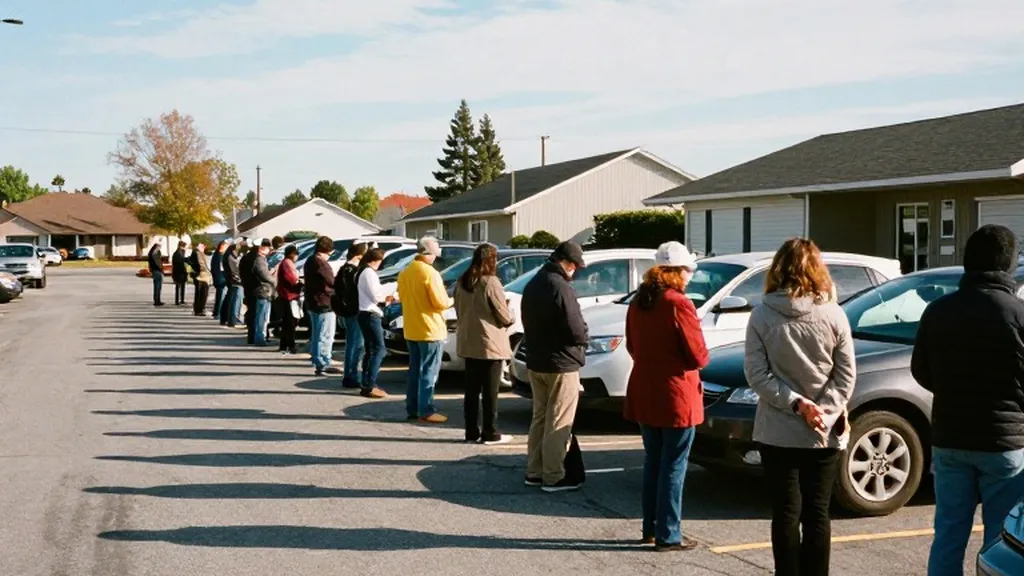
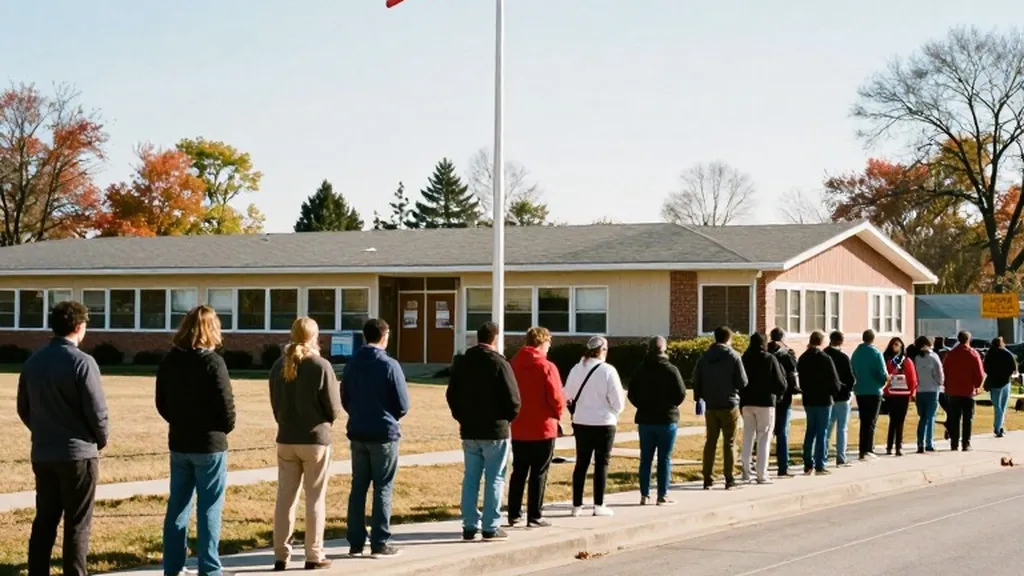
For those voting today, it is important to know where and when to cast your ballot. You can find your polling place at vote.gov or your state election office. Polling hours vary by state, but most are open from early morning until evening. For example, in Florida, polls are open from 7 a.m. to 7 p.m. In New York, they are open from 6 a.m. to 9 p.m. In Texas, they are open from 7 a.m. to 7 p.m. ID rules vary by state, so check your state’s rules before you go. Anyone who is in line when polls close is entitled to vote, so it is important to arrive early if possible.