UAE Adviser Gargash Warns Military Action Will Complicate Iran Conflict
Diplomats in Manama assess the risk of renewed confrontation as negotiators in Qatar work to reopen the Strait of Hormuz.
By John Wilson ·

Anwar Gargash, a presidential adviser for the United Arab Emirates, stated on Sunday that military solutions will not provide a quick exit from the current crisis with Iran.
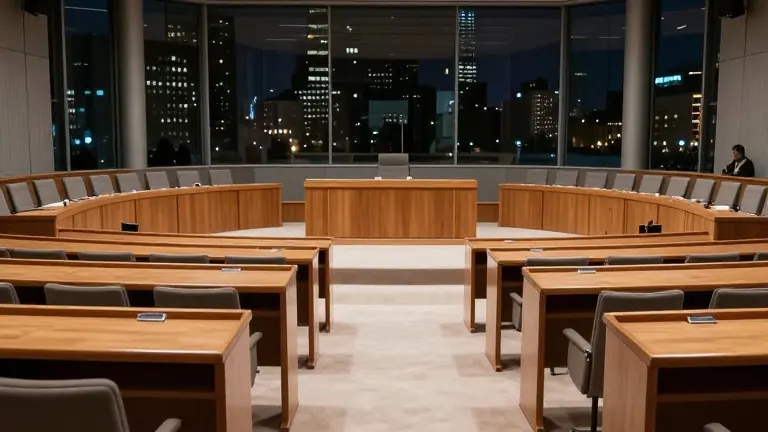
Speaking at the Manama Dialogue security forum in Bahrain, Gargash argued that the region needs political tools to manage the conflict. He said the situation is already complicated and that adding military force would make it worse.
The forum takes place while Iranian negotiators meet in Qatar. Iranian Foreign Minister Abbas Araghchi said the talks focus on a proposal to reopen the Strait of Hormuz. He noted that no direct talks are occurring between Iran and the United States. Araghchi added that the outcome depends on Washington's answers to specific questions from Tehran.
Araghchi expressed hope that the U.S. chooses diplomacy over other options. He said Iran is prepared for both defense and diplomacy, a choice he tied to the rationality of the American approach.
Gargash acknowledged a wide gap between U.S. and Iranian positions. He warned that if these stances are not bridged, the region must worry about the worst-case scenario. He said another round of war is not in the interest of the region or Iran, but the UAE is braced for the possibility of escalation.
The conflict began on Feb. 28 with joint strikes by the U.S. and Israel. Iran responded with attacks on Gulf nations. The International Institute for Strategic Studies reported that the UAE faced the largest number of airborne attacks from Iran before an April ceasefire. The UAE endured more than 3,000 drone and ballistic missile attacks targeting airports, military sites, and oil facilities. Most of those attacks were intercepted.
Gulf nations have spent billions of dollars to boost defense capabilities since the fighting started. Gargash said the war has solidified U.S.-UAE relations. He described the partnership as central to the UAE's ability to defend itself.
Bahraini Foreign Affairs Minister Abdullatif bin Rashid Al Zayani said his country welcomes efforts to reduce tensions and prevent escalation. He described Iran's actions as a continued pattern of attacks or threats targeting sea, air, and data facilities. He noted that Iran has targeted underwater data cables as recently as last month. He also pointed to attacks by Iran-backed Houthi rebels on Saudi Arabia as part of this pattern. The Houthis have hit critical oil pipelines and disrupted air traffic in the kingdom this summer. IISS data shows Iran fired 500 drones and nearly 200 ballistic missiles toward Bahrain during the height of the war. Those attacks hit the naval base, residential buildings, the financial district, and a water desalination plant.
Source: WRAZ