$18.49: The price of a fungus that used to be field waste
St. Louis farmers are now selling infected corn ears as a premium delicacy, driven by climate shifts and a growing market for niche ingredients.
By Yuna Patel ·
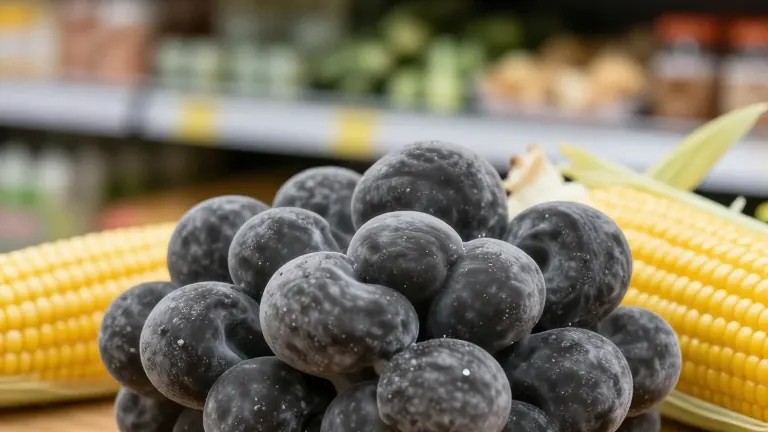
St. Louis residents are now paying $18.49 per pound for a gnarled, blue-tinged growth that farmers previously discarded as crop damage. This fungus, known as huitlacoche or corn smut, has moved from the trash pile to the premium produce section in local grocery stores. The price point places it among the most expensive vegetables available at Local Harvest, an independent market in St. Louis.
The supply chain for this seasonal item connects Old Order Mennonite farms in southeast Missouri to high-end restaurants in the city. A vegetable broker, who requested anonymity to protect his day job, drives a U-Haul truck to the Home Gardens Community Market in Farmington. He collects the infected corn ears from 25 Mennonite families who have traditionally sold only perfect produce. Ephraim Brubaker, the market manager, noted the shift in value. He said, "Now we're selling it for $10 dollars a pound." The broker transports the goods to St. Louis, where chefs purchase them for their menus.
Dilip Shah, a scientist at the Donald Danforth Plant Science Center in St. Louis, describes the growth as uncontrolled tissue expansion caused by a fungus. The spores enter the corn through injury or silk and reprogram the cells to divide. Shah explains that the fungus exploits the plant's weakened immune system, which occurs during periods of extreme heat followed by heavy rain. Trent Front, the Illinois state climatologist at the University of Illinois, confirms that growing season temperatures and humidity have increased. Front stated, "Over the next 20 or 30 years, we will likely have more years that are warmer, more humid, more conducive for fungal growth than years that aren't." This climate pattern supports the increased presence of the fungus in the region.
Restaurants are integrating the ingredient into their offerings. Adrian Maldonado, executive chef at Malo, an upscale Mexican restaurant in St. Louis, serves huitlacoche as the first course in an eight-course tasting menu. He cooks the fungus in butter until it turns black, then adds lime and salt. Maldonado buys the product from the vegetable broker, whom he calls his "huitlacoche dealer." He said, "He approached me a couple of weeks ago and he had some really fresh, beautiful stuff and I couldn't pass it up." Maldonado believes the growing Latino population in St. Louis has increased demand for traditional ingredients.
William Esslinger, owner of Confluence Kombucha in St. Louis, also uses the fungus in his products. He slices the huitlacoche and bottles it with chanterelle-based kombucha. Esslinger, who began brewing kombucha in 2009, uses humor to encourage customers to try unfamiliar flavors. He said, "I think with anything that's new, like huitlacoche and stuff like that, bringing humor is always the best medicine." The store currently offers the huitlacoche kombucha on tap, accented with shiso, a Korean herb. Esslinger aims to preserve the story of the ingredient so it is not simply thrown away in fields.
Source: KWMU
More Business · Business Watchdog · Report a business · Got a Story?