Ukraine blames SpaceX throttle for interceptor failures and two deaths
Military officials say a sudden speed limit on Starshield terminals grounded high-velocity drones, leading to strikes on energy infrastructure and shifting the debate on orbital market dominance.
By John Wilson ·
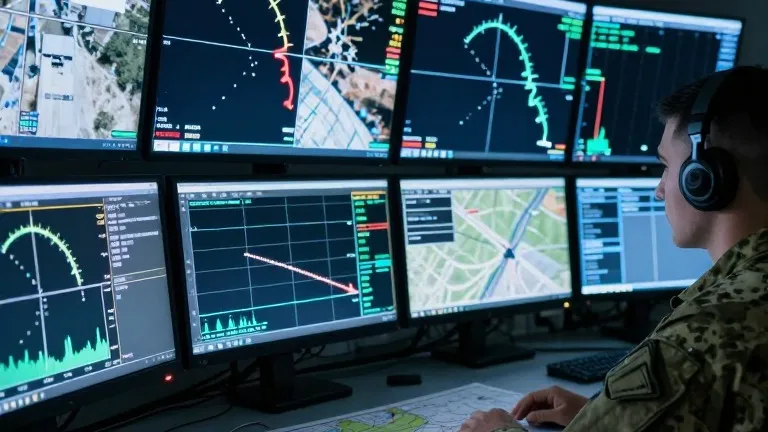
Ukraine’s high-speed drone interceptors stopped functioning last week after a service provider limited the velocity at which military terminals could connect to its satellite network. The disruption allowed Russian bomb-carrying drones to strike Ukrainian energy infrastructure more easily. According to the Ukrainian military, the incident resulted in two deaths and at least 17 injuries.
The service in question is Starshield, the military variant of Starlink. The provider throttled the system so that terminals moving above specific speed thresholds lost connectivity. Ukrainian commanders stated they received no advance notice of this restriction. President Volodymyr Zelenskyy characterized the move as a direct signal from the United States, citing rising tensions with President Donald Trump. Public criticism in Ukraine focused on both the American leadership and SpaceX CEO Elon Musk for allowing the cutoff.
Accounts of who initiated the slowdown have changed since the event. Musk initially stated that SpaceX does not control Starshield operations and that the US military makes those decisions. The White House denied taking any action. Subsequent reports indicated that Musk proposed the slowdown to Trump, who approved it. Later reports suggested Musk ordered the restrictions independently. Access to the service in Ukraine has since been restored.
This incident follows previous instances of limited access. In 2022, coverage was not extended to support a Ukrainian counterattack in Crimea. Ukraine relies heavily on US technology for its defense systems. Experts note that the episode illustrates how geopolitical leverage has concentrated in the hands of a single unelected executive due to the consolidation of the space industry.
Wendy Whitman Cobb of the School of Advanced Air and Space Studies at Maxwell Air Force Base stated that SpaceX holds a de facto monopoly on launch. She noted that competitors like United Launch Alliance, Blue Origin, and Rocket Lab exist but lack the frequency, mass, scale, and cost advantages of SpaceX. Space economist Oğuz Karasu of the Oxford Space Initiative described the monopoly as practical rather than legal. He explained that while launch represents only 8 percent of the space industry, the rest of the sector cannot function without it.
SpaceX has deployed more than 10,000 Starlink satellites into low Earth orbit using Falcon 9 rockets. Andrew Reddie of the University of California, Berkeley, called the situation a near-antitrust issue because SpaceX launches support its own constellations, reducing the incentive to launch competing networks. Although SpaceX has launched some Amazon Kuiper satellites, Whitman Cobb and Karasu reported hearing complaints that Falcon 9 prices for low Earth orbit are rising. Starlink prices have also increased since its 2020 beta.
The experts emphasized that the stakes extend to daily life through GPS and satellite communications. Whitman Cobb noted that a GPS outage could disrupt fuel pumps, ATMs, financial transactions, and ambulance dispatch. Karasu argued that giving one person such control is not ideal for society’s future. Reddie identified the central security problem as a non-state actor making decisions as if it were a government.
NASA and the Space Force also face exposure to this market structure. SpaceX is reportedly retiring the Falcon 9 and accepting no new missions from 2028. This leaves the Space Force searching for launch options for military satellites and raises questions about NASA’s access to the Crew Dragon capsule. A Falcon 9 issue in February briefly grounded the rocket and raised concerns about the Crew-12 launch. NASA continues to support Boeing’s Starliner and contract with companies like Rocket Lab and Blue Origin. Michele Scataglini of the Oxford Space Initiative stated that the market needs more competition, otherwise it is not a market.
Source: The Verge