Kremlin Backs Three-Way Ukraine Peace Talks for Mid-November
Moscow has agreed to restart diplomatic negotiations with Washington and Kyiv after a productive meeting between President Putin and U.S. envoy Steve Witkoff.
By John Wilson ·
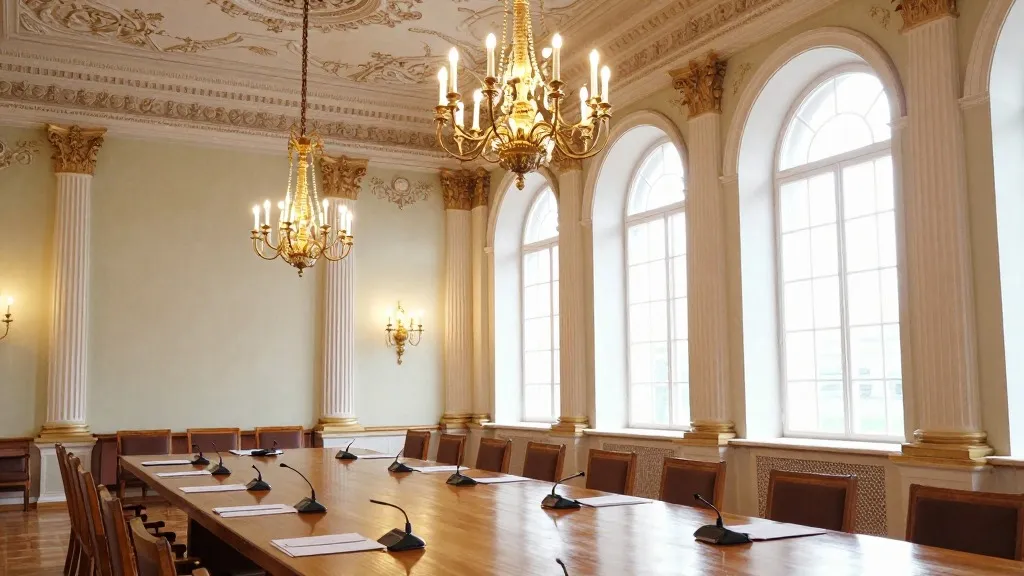
The Kremlin announced on Wednesday that Russia will resume trilateral peace negotiations with the United States and Ukraine in November. This development marks a significant shift in diplomatic efforts, potentially leading to the first high-level talks between the three parties since February. The decision was confirmed by Yuri Ushakov, the foreign affairs adviser to Russian President Vladimir Putin, following a strategic meeting in St. Petersburg.
Ushakov stated that Putin agreed in principle to restart the talks after November 10. The primary objective of these negotiations is to construct a comprehensive security framework for both Russia and Ukraine once the conflict concludes. This move comes as U.S. President Donald Trump intensifies pressure on Kyiv to finalize a deal that halts the fighting. The Russian leader met with U.S. envoy Steve Witkoff to discuss the next steps in this process.
Ukrainian President Volodymyr Zelenskyy voiced support for Washington’s initiative to swiftly reopen dialogue channels. In an audio message released late Wednesday, Zelenskyy described the agenda as straightforward, aiming to end the war and prepare for a summit between the leaders. He noted that while Russia has repeatedly expressed readiness to meet, previous attempts were often canceled. Zelenskyy expressed cautious optimism, saying he would observe how this round of talks unfolds.
The diplomatic momentum was briefly interrupted by military action. Shortly after Zelenskyy’s message, missile alerts sounded across Kyiv, accompanied by loud explosions in the capital. Overnight strikes left three people dead and twelve wounded, with ten residential buildings damaged. Ukrainian Prime Minister Serhii Koretskyi reported that energy facilities in Kyiv and three other cities were targeted, while two additional people died in drone strikes near Kharkiv.
The St. Petersburg meeting between Putin and Witkoff lasted approximately three hours. It took place the day after Witkoff met with Zelenskyy and European leaders in Oslo. Ushakov criticized the proposals from Oslo, stating they contained little real value for resolving the crisis, though he later conceded on state television that they represented a step in the right direction. The Kremlin’s stance suggests a willingness to engage despite lingering frustrations with the current diplomatic trajectory.
During the discussions, Witkoff and Jared Kushner, who joined via video, proposed a technical-level meeting involving all three nations. They also shared progress from their earlier talks with Zelenskyy. The conversation covered postwar economic plans, European security architecture, and the logistics of the upcoming summit. Ushakov highlighted that large-scale joint economic projects between Russia and the U.S. were discussed in detail, with some nearing the implementation stage.
Putin indicated readiness to consider restoring economic ties with the United States and discussed the U.S.-led conflict with Iran. Moscow expressed a willingness to leverage its relationship with Tehran to facilitate peace. The Kremlin also announced the release of Stephen Hubbard, a retired American teacher imprisoned on mercenary charges, which Witkoff described as a goodwill gesture after Trump’s request for his freedom.
In other developments, Putin met with Chinese Premier Li Qiang during his visit to St. Petersburg. The two leaders discussed a potential trilateral summit in China next month, with Beijing already making preparations. Following his Russian trip, Witkoff returned to Oslo for consultations with Prime Minister Jonas Gahr Støre. Støre suggested that Russia is now seeking diplomatic opportunities and that the new talks are likely to occur in mid-November.
At the White House, Trump continued to press Zelenskyy for compromise, stating that the U.S. has provided substantial support to Ukraine. He warned that failure to reach a deal could lead to negative consequences. Meanwhile, Zelenskyy noted that Kyiv is receiving better early warnings of incoming Russian missiles from its partners, addressing previous concerns about insufficient notice. The Russian Defense Ministry reported intercepting 373 Ukrainian drones over various regions and the Black Sea.
Source: Atlanta News First · original report published