Spain Rocket Near Debut As SpaceX Skips Bids
The company passed on military work while Spain targets a 2027 debut for its Miura 5 rocket.
By Layla Edwards ·
SpaceX declined three launch contracts from the US Space Force, a decision outlined in the Rocket Report published on October 23. The company communicated its refusal to the military branch, citing the specific terms of the offers as the reason for the rejection.
The decision came alongside a separate assessment regarding SpaceX’s Starship vehicle. A NASA safety panel evaluated the mission architecture for a lunar landing. The panel indicated that the vehicle might require up to 22 refueling operations in orbit to achieve the necessary payload mass for the mission.
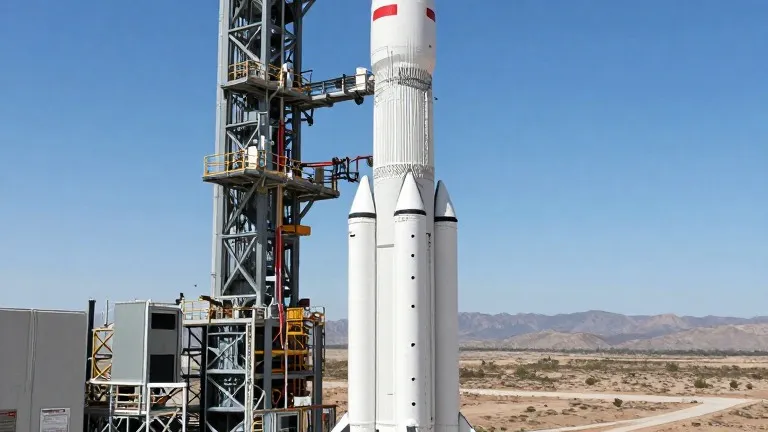
In Spain, PLD Space is moving its Miura 5 rocket toward its first flight. The company stated that the vehicle is approaching final integration. PLD Space now targets a debut date before mid-2027 for the small-lift launch system.
CEO Raúl Torres discussed the production status during a program update on October 19. He confirmed that the company has built three Miura 5 vehicles. Two of these units are designated for qualifying key system elements. The third vehicle is the one currently undergoing final integration for the inaugural launch.
Torres explained that building all three units simultaneously allowed engineering teams to maintain continuous workflows. "Manufacturing these three vehicles has allowed our teams to work continuously across different stages of production and integration, applying the lessons learned from each qualification campaign directly to the launch vehicle," Torres said.
One second stage of the Miura 5 is now fully integrated. This component is located at the PLD facility in Teruel, Spain. Engineers are preparing for a qualification campaign that includes a wet dress rehearsal and a static hot-fire test to validate the design under realistic operating conditions.
Reaction Dynamics in Canada announced a plan to raise $350 million in capital. The startup aims to use the funds to expand its workforce from 68 employees to more than 350. The company is developing the Aurora rocket, which it hopes will reach orbit in 2028, and is planning a medium-lift vehicle named Borealis for a debut by 2031.
Source: Ars Technica