SpaceX declines military contracts as Starship fueling requirements mount
A NASA safety panel suggests lunar missions may require up to 22 refueling stops, while the company turns down three Space Force deals.
By John Wilson ·
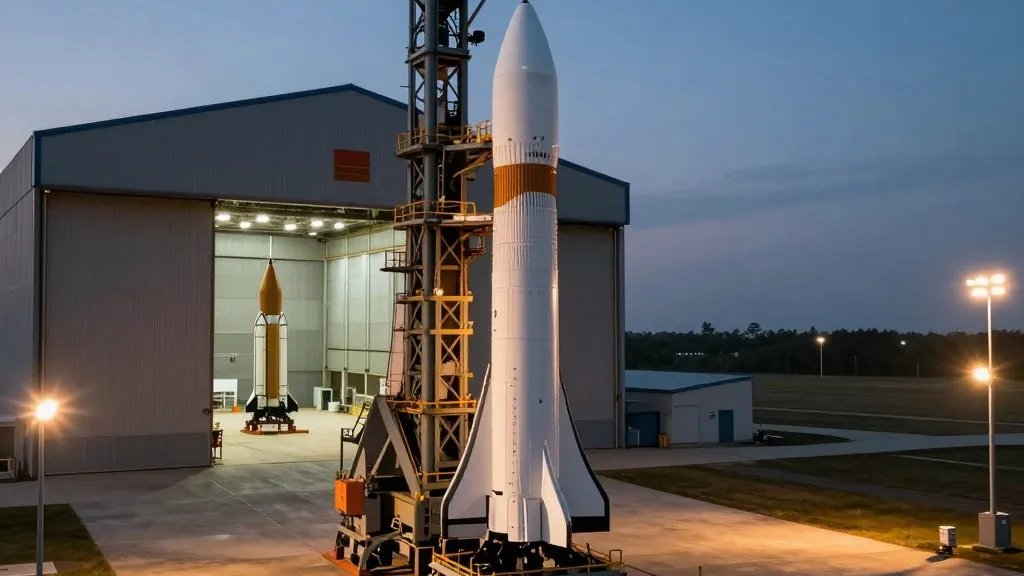
The space industry is facing a period of significant strategic divergence, marked by a high-profile refusal from SpaceX to engage in new military business. This week brought two major developments that highlight the tension between commercial ambitions and government demands. On Thursday, SpaceX informed the US Space Force that it would not accept three offered launch contracts. While this decision may seem like a simple rejection, it signals a complex calculation regarding the company's capacity and focus in a crowded market.
The refusal to take these military contracts creates an immediate question for analysts: why would a major player turn down guaranteed revenue? The timing suggests that SpaceX is prioritizing its civil space initiatives, particularly the development of the Starship vehicle. By declining the Space Force offers, the company may be seeking to streamline its operations and avoid the specific logistical and political burdens often associated with military payloads. This move forces competitors to step in for those three slots, potentially shifting the balance of power in the heavy-lift market.
Simultaneously, the technical challenges facing the Starship program have been quantified by a NASA safety panel. The panel indicated that a lunar landing mission supported by Starship could require up to 22 separate refueling operations in orbit. This number is critical for understanding the operational complexity of future deep space missions. Each refueling event adds layers of risk and logistical coordination, making the architecture of the mission a subject of intense scrutiny. For Midwest readers interested in the broader implications, this highlights that the path to the moon is not just about building a big rocket, but about managing a complex dance of multiple vehicles in low Earth orbit.
While SpaceX dominates the headlines, the broader launch ecosystem is also evolving with new entrants preparing to enter the fray. In Spain, PLD Space has announced that its Miura 5 rocket is nearing its final integration phase. The company, which has already manufactured three of these small-lift vehicles, is targeting a first flight before mid-2027. This timeline is ambitious, given that the vehicle is currently undergoing rigorous testing. CEO Raúl Torres noted that the production of the first three units allowed their teams to apply lessons learned from qualification campaigns directly to the launch vehicle. One second stage is now fully integrated and is at the Teruel test facility for a wet dress rehearsal and a static hot-fire test.
The progress of the Miura 5 is significant for the European launch market, which has long relied on external providers for small-lift capabilities. By moving quickly toward its inaugural launch next year, PLD Space is aiming to establish a foothold in the sub-orbital and low Earth orbit segments. The company's emphasis on continuous production and integration suggests a mature approach to manufacturing, one that seeks to minimize the learning curve for future units. This development adds another layer of competition to the global launch landscape, potentially driving down costs for small satellite operators.
Across the Atlantic, Canadian startup Reaction Dynamics is making its own moves to secure its future. The company, one of three prominent Canadian launch ventures, is seeking to raise $350 million. This capital injection is intended to expand its workforce from 68 to more than 350 employees. The funds will support the development of the Aurora rocket, a small-lift vehicle that Reaction Dynamics hopes will reach orbit in 2028. The company is also planning a medium-lift rocket named Borealis, with a debut targeted for 2031. This dual-vehicle strategy allows Reaction Dynamics to address different market segments as it scales.
The fundraising effort by Reaction Dynamics underscores the capital-intensive nature of the launch industry. Building a rocket is only one part of the equation; scaling a workforce to maintain and operate these vehicles is equally crucial. The target of 350 employees indicates a significant step up from the current 68-person team, suggesting that the company expects to enter a phase of heavy engineering and testing in the coming years. For investors and industry watchers, this raises the bar for what is required to compete with established players like SpaceX.
These concurrent developments illustrate a space sector that is both consolidating and diversifying. SpaceX is tightening its focus on its core Starship program while selectively engaging with the military sector. Meanwhile, new players in Europe and North America are pushing to bring their vehicles to orbit, adding depth to the supply chain. For the Midwest, where much of the aerospace manufacturing and testing infrastructure is located, these trends signal continued investment in the supply chain that supports these global launches. The next few years will likely see a test of whether these new entrants can match the pace and reliability of the industry leader.
As the industry moves forward, the interplay between commercial and military interests will remain a key factor. SpaceX's decision to decline the Space Force contracts sets a precedent for how private companies may manage their relationships with government clients. It suggests a willingness to say no when it does not fit the broader strategic vision. At the same time, the technical hurdles facing Starship, such as the need for numerous refuelings, remind us that the technology is still maturing. The coming months will provide further clarity on how these challenges are being managed and how the new entrants will fare in a market that is becoming increasingly competitive.
Source: Ars Technica · original report published
More Business · Business Watchdog · Report a business · Got a Story?