SpaceX Rocket Cadence: Falcon 9 Launch Gaps Widen to 11 Days
SpaceX deployed 27 Starlink satellites from Vandenberg on Oct. 23, marking the 116th mission of the year as the company accelerates development of its Starship vehicle.
By John Wilson ·
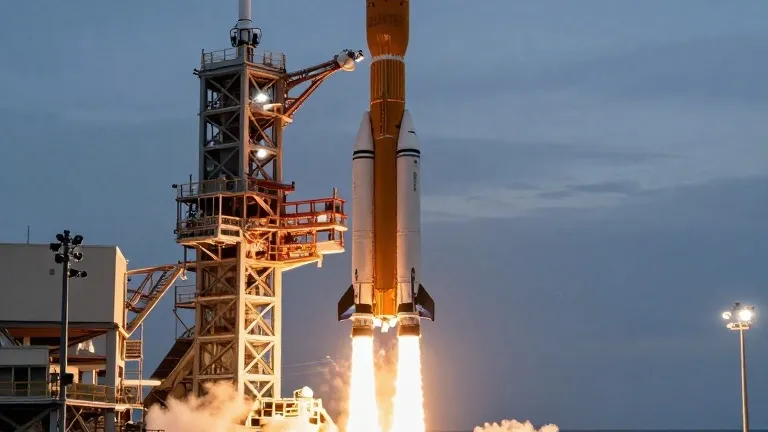
SpaceX sent 27 Starlink satellites into orbit on Oct. 23, marking the 116th Falcon 9 launch of the year. The flight followed an 11-day gap, a period that signals a shift in the company's operational rhythm as it prioritizes the development of its next-generation rocket.
The mission lifted off from Pad 4E at Vandenberg Space Force Base in California at 3:48 p.m. local time. The 27 spacecraft, identified as Starlink Group 15-15, were secured inside the payload fairing. This launch was the 36th flight for booster B1063, which previously carried NASA's DART mission in November 2021.
The booster separated from the upper stage approximately 2.5 minutes after liftoff. It then reoriented for reentry and landed on the droneship Of Course I Still Love You shortly after the eight-minute mark. The upper stage continued toward low Earth orbit, with satellite deployment scheduled to begin 62 minutes after launch.
This launch adds to a constellation that now contains more than 11,000 active spacecraft. However, the frequency of these missions has decreased. The previous Starlink launch occurred 11 days earlier, and that flight was the first in more than three weeks. At their peak, these missions flew every two to three days.
SpaceX is shifting its focus to Starship, a larger rocket designed for full reusability. Starship features a payload bay large enough for Version 3 Starlink satellites, which are too big for the Falcon 9. Once operational, SpaceX plans to phase out the Falcon 9 and Falcon Heavy variants almost entirely.
The 100th Falcon 9 launch of 2026, a Starlink mission from Cape Canaveral, is set to be the final Starlink flight from Florida's Space Coast. The company completed 165 launches in 2025, which remains the busiest year on record. At the current pace, the Falcon 9 is projected to complete just under 150 missions by the end of 2026.
Source: Space.com