France sends 70,000 police to guard shifted protest routes
Authorities moved the main Paris march to the city's edge after last week's demonstrations damaged 3,000 shops.
By John Wilson ·
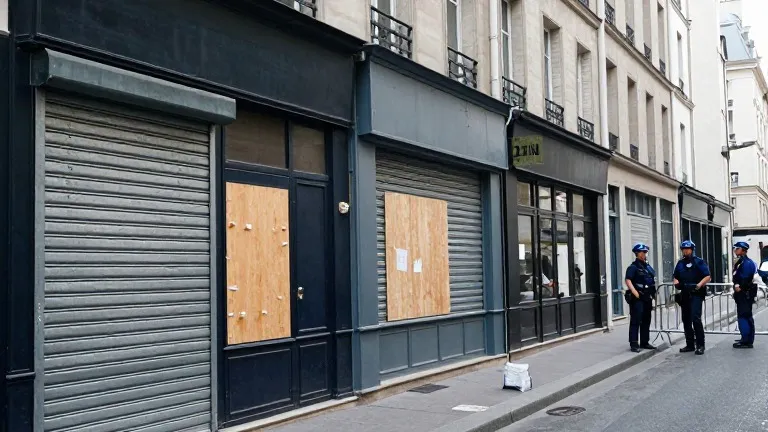
France is preparing for a new wave of street protests.
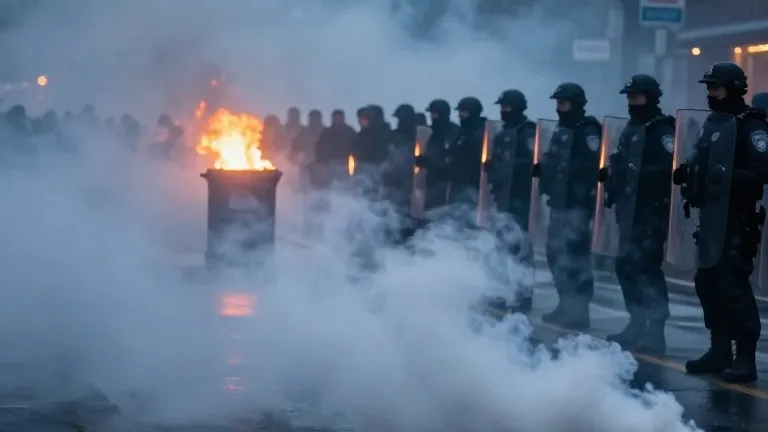
Interior Minister Laurent Nuñez announced that up to 70,000 police officers will be deployed across the country this Saturday. The force will include helicopters, armored vehicles, and water cannons. This mobilization comes one week after unrest left shops looted and vehicles burned.
Police changed the planned route in Paris on Friday. The march is now restricted to the southeastern edge of the city. It will run between Porte d'Italie and Porte de Vincennes. This replaces the original path from Bastille to Nation. Last week's demonstrations drew more than 500,000 people. Officials expect a similar crowd size this weekend.
The protest movement began last month over staff shortages at a high school southeast of Paris. It has since expanded to include broader demands. Students want more teachers, better school buildings, and more university spots. Unions are seeking higher wages and improved pensions to help households manage rising living costs.
Student groups released a joint 10-point plan. They are asking for 250,000 additional places in higher education. They also want to end the Parcoursup admissions selection process. The plan includes an extra 200 euros, roughly $313 Canadian, in monthly student grants. A rent freeze in public student housing is also part of the demands.
Businesses and cultural sites are taking precautions. The Louvre, Musée d'Orsay, Picasso Museum, and Grand Palais will be closed on Saturday. Art Basel opened to the public on Friday for a single day. Organizers canceled the full weekend program due to unrest. Around 3,000 shops across France were damaged or looted last weekend.
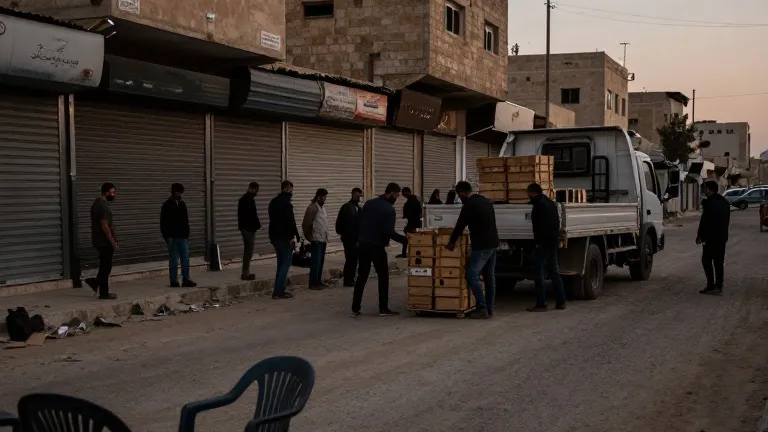
Shopkeepers have been boarding up their stores all week. Akram Ahmed, a 34-year-old contractor, was boarding up an optician's shop near Saint-Lazare station. "I got the call last night," Ahmed said. He noted that the owner told him he was saving his life.
Not all cities have allowed marches to proceed. Paris and Marseille have scheduled rallies. Local authorities banned protests in Lyon, Nice, and Montpellier. French media reported that police used tear gas in Lyon on Saturday morning. Trade unions criticized the bans as violations of freedom of expression protected by the constitution.
Damage outside Paris has been serious. Two suspects in the fire that nearly destroyed the 19th-century city hall in Limoges are under formal investigation. They are being held pending trial. The probe includes attempted murder of a public official. Paris police prefect Patrice Faure urged shopkeepers to hire security guards. He later clarified that protecting businesses remains the government's responsibility.
President Emmanuel Macron faces the crisis in the final stretch of his term. His popularity is at its lowest since he took office in 2017. He stated that the security measures are needed to protect city centers, businesses, and public buildings. In Orléans, about 110 kilometers south of Paris, thousands gathered for an anti-far-right protest. This event was held alongside a two-day congress of Marine Le Pen's nationalist party. Victoria Ambrosini, an art critic and teacher at Saint-Denis University, said money is now concentrated in the hands of very few people. She added that it is not possible anymore.
Source: CBC News