Defense Spending: North Korea Scales Drone Output With Russian Aid
Moscow's transfer of military data and industrial support is enabling Pyongyang to rapidly scale drone manufacturing and refine missile precision.
By John Wilson ·
The strategic partnership between Moscow and Pyongyang is reshaping the military balance in East Asia, driven by a surge in advanced weaponry production.
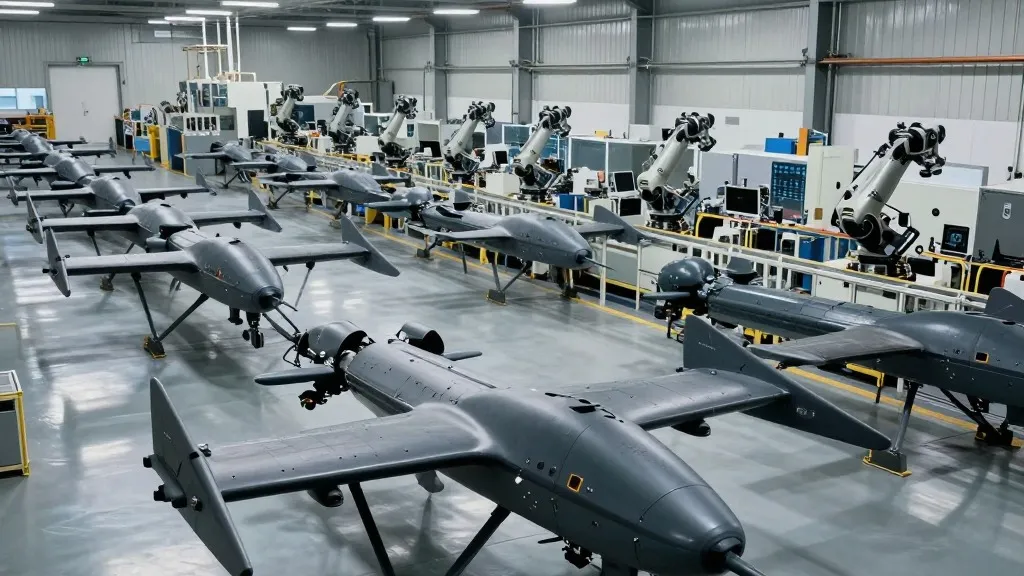
The New York Times reports that North Korea has initiated mass production of attack drones while simultaneously upgrading its ballistic missile capabilities. This rapid modernization is largely fueled by a deepening cooperation with Russia. The exchange involves Moscow providing military technology and data in return for North Korean soldiers, laborers, and weapons.
The alliance has intensified since Russia launched its full-scale invasion of Ukraine. North Korea has used this window to modernize its armed forces and equipment with significant Russian assistance. A key development occurred in early October when Pyongyang tested a tactical ballistic missile. The regime claims the weapon can carry a nuclear payload, highlighting the increasing strategic nature of the threat.
Discrepancies emerged regarding the missile's performance metrics during recent evaluations. South Korea and Japan estimated the missile traveled approximately 700 kilometers, or 430 miles. In contrast, North Korea asserted a range of 1,000 kilometers, or 621 miles. This gap in intelligence underscores the difficulty in assessing the true capability of the new systems.
Seoul's response to the latest test marked a notable shift in diplomatic and military posture. Instead of issuing its customary short statements describing the launch as provocative, South Korea conducted its own test-fire of a hypersonic ballistic missile. President Lee Jae Myung observed the event, which took place just five days after the North's launch. Analysts view this as a sign of growing unease in Seoul regarding the pace of North Korean technological progress.
Access to Russian deployment data has been a critical factor in improving North Korean weapons accuracy. Analyst Anton Ponomarenko noted that this feedback loop has enhanced the manoeuvrability of Pyongyang's systems. He described the resulting threat to South Korea as more substantial due to these refinements in precision and control.
Russia has also played a pivotal role in helping North Korea build and mass-produce unmanned systems. The New York Times observes that Pyongyang has studied drone tactics in Ukraine and the Middle East. These conflicts demonstrated how inexpensive drones can overwhelm expensive air defense networks. In a recent drill last month, a North Korean drone swarm attacked a target island simultaneously with cruise and ballistic missiles fired from different directions.
These evolving tactics suggest that South Korea and its allies may soon face pressure to redesign their air defense architectures. Such upgrades are expected to come at exorbitant cost to maintain effective deterrence. The report follows earlier accounts of the partnership, including Bloomberg's September finding that Russia is using North Korean citizens to produce military drones. Up to 25,000 North Koreans are believed to be working at Russian military plants, notably in Alabuga, Tatarstan.
A North Korean missile forces unit has also begun deploying in western Russia. This unit could be equipped with 120 ballistic missiles and six launchers for strikes against Ukraine. Previous reports indicated that Russia asked North Korea in August to provide KN-30 ballistic missiles. North Korea had also announced tests of a modernised 240mm multiple-launch rocket system, a tactical ballistic missile, and a 155mm long-range artillery shell in June of this year.
Source: Ukrainska Pravda
More Business · World news · Business Watchdog · Report a business · Got a Story?