Breaking: Dow Loses 1,800 Points as Nasdaq Plunges Into Correction
The S&P 500 records its worst day since April 2025, erasing Wednesday's rally and wiping $2.5 trillion from tech stocks.
By Yuna Patel ·
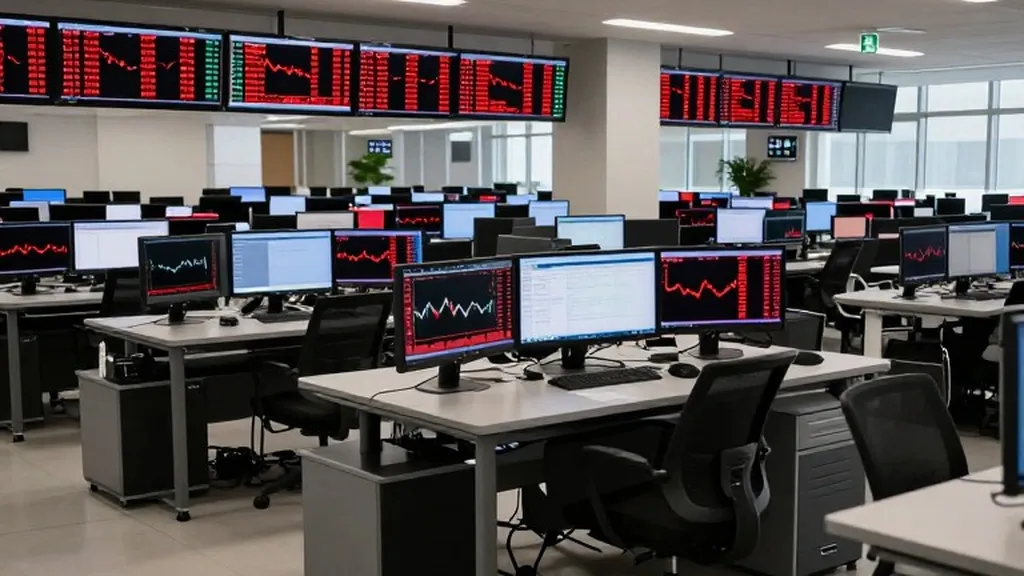
The Dow Jones Industrial Average fell more than 1,800 points on Thursday, a drop of 3.4 percent that closed the index at 51,868. This sharp decline erased the gains made on Wednesday, when Wall Street had recorded its biggest daily gain in months. For many American savers and 401(k) holders, the reversal marked a sudden and painful loss in value after a brief period of optimism following the midterm elections.
The S&P 500 fell 4.3 percent, marking its worst day since April 2025, when President Trump announced sweeping global tariffs. The selling spread through every sector of the index and gathered pace as the trading day progressed. The Nasdaq Composite suffered an even steeper blow, falling 5.5 percent to close more than 11 percent below the record it set last month. This decline places the index in correction territory, defined as a fall of at least 10 percent from a recent high.
The scale of the financial damage was immense. An estimated $2.5 trillion in market value was wiped from the Nasdaq Composite, according to Dow Jones data cited by the BBC. The so-called Magnificent Seven technology companies, which include Apple, Nvidia, and Tesla, shed about $1 trillion in value in the single trading day. This widespread decline highlights the heavy weight that technology stocks carry in the broader market and the significant risk to portfolios heavily invested in these sectors.
The catalyst for the crash was the Democrats' sweep of the House and Senate in Tuesday's midterm elections. Democrats campaigned on slowing the spread of data centers and AI, and voters rejected data center development in a series of local ballots. In Texas, Democrat Gina Hinojosa won the race for governor after campaigning on an immediate moratorium on new data center construction. These victories in states with large concentrations of planned facilities heightened concerns that the AI build-out would face new hurdles.
Investors are weighing whether tighter state-level restrictions could slow data center construction, pressuring companies tied to the artificial intelligence trade. This concern sits on top of broader anxiety that the huge sums being spent on AI may not pay off and that AI shares may be in a bubble. Neil Wilson, an investor strategist at Saxo UK, described the situation as a complete capitulation-level event in tech stocks. He noted that the fear is a total momentum unwind as Democrats pace the frontier and kibosh data center buildout.
Chip and AI stocks led the rout, with Nvidia falling 9.2 percent and losing more than $400 billion in market value. SanDisk fell more than 22 percent, while Western Digital fell 17 percent. AMD and Micron each fell more than 17 percent, and Intel fell 10.3 percent. The Philadelphia Semiconductor Index, which tracks 30 of the largest chip companies, fell more than 12 percent. It has fallen more than 30 percent since the beginning of October and is almost 40 percent below its peak in June.
Volatility spiked as the market reacted to the news. The Cboe Volatility Index, or VIX, jumped as much as 5.7 points to above 28, its highest reading since March 31, 2026. The Guardian reported the VIX up 61 percent on the day. By midday, nearly 800,000 VIX call options had traded, which was 3.5 times the 30-day average. The 10-year Treasury yield fell to 4.83 percent, its lowest since September, as investors bought bonds as a haven from the stock market turmoil.
Analysts offered mixed perspectives on the future outlook. Dan Ives, a tech analyst, stated that there is no way to sugarcoat that Democrats taking control, especially over the Senate, will create major hurdles for AI and tech legislation. Ted Parkhill, founder and chief executive of Incline Investment Management, said the market is moving from the promise of AI to the price of AI. He added that while AI is transformative, every AI-related stock is not currently priced appropriately, suggesting a lot of turmoil ahead.
Susannah Streeter, chief investment strategist at Wealth Club, noted that fresh panic over the AI trade has hit Wall Street hard. She explained that fears that vast sums poured into AI infrastructure may not deliver returns are colliding with the prospect of a sharp slowdown in data center construction. Gene Goldman, chief investment officer at Cetera Financial Group, said the sell-off had become exaggerated and predicted a recovery. He stated that corrections in a bull market are typically short-lived and that while it is ugly right now, a bounce back is expected soon.
The tech industry is responding to the backlash. Greg Brockman, president and co-founder of OpenAI, said everyone had been surprised by the reaction to data centers. He emphasized that the industry needs to be in communities to bring them on board, rather than just announcing projects from afar. Dina Powell McCormick, president of Meta, told the same conference that the industry needs to double and triple down on telling the story of AI to the public.
Source: BBC News, The Guardian with Reuters, The New York Times, CNBC
More Business · Business Watchdog · Report a business · Got a Story?