Tirana Unrest: Tear Gas and Arson Mark Escalating Protests
Saturday’s clashes in Albania’s capital left over 300 people hurt and dozens detained as demonstrators targeted government buildings.
By Layla Edwards ·
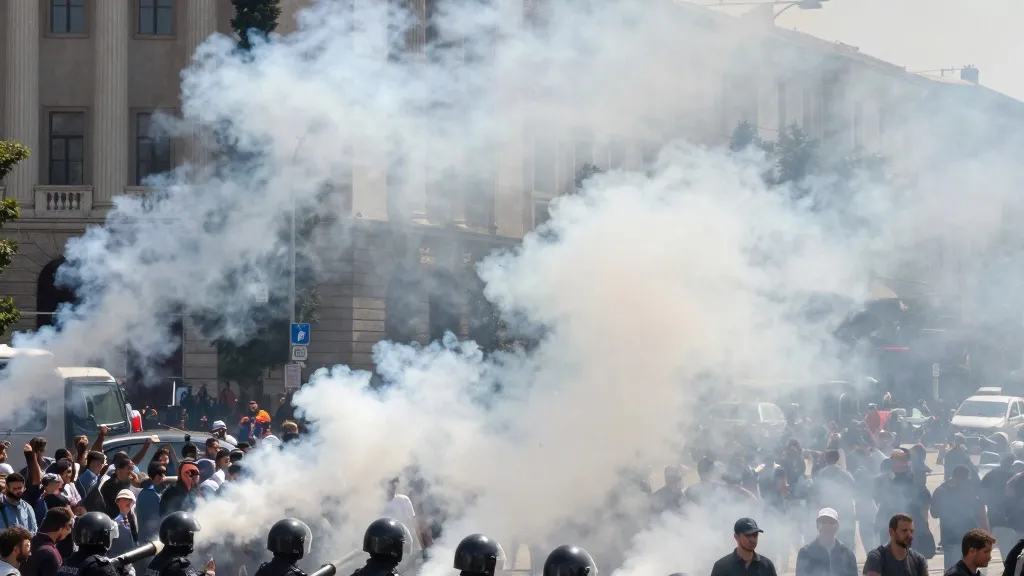
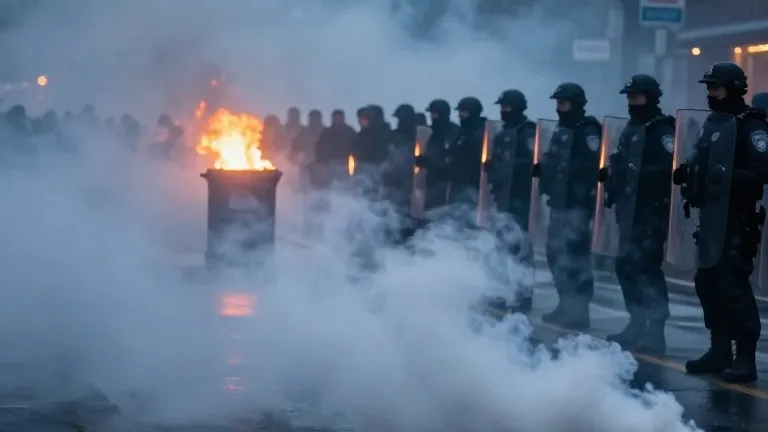
For residents of Tirana, the recent lull in street protests ended abruptly on Saturday. What had been a period of relative calm since the mid-October uprising turned into a chaotic confrontation where police deployed water cannon, tear gas, and rubber bullets. The immediate consequence for the public is a renewed sense of instability, with authorities reporting that more than 300 protesters and officers were injured and dozens of demonstrators faced arrest.
The intensity of Saturday’s events marked a sharp escalation from previous days. Organizers had called on students and citizens from across the country to gather, resulting in thousands of attendees. The crowd was not limited to students; university professors, artists, and opposition parties all announced their support for the rally. Local media noted that police increased their security presence around the capital and conducted vehicle checks to control the flow of people entering the city.
The Ministry of Education building became the primary target for the demonstrators, reflecting the original grievances regarding poor school conditions. Some members of the crowd threw stones at the structure and pushed burning bins toward it. This physical damage to a state institution underscores the frustration felt by many who view the current administration as unresponsive to their needs for better public services and economic relief.
Context for this surge in anger dates back to May, when news broke about a luxury hotel project linked to the family of U.S. President Donald Trump. That revelation sparked a broader campaign against corruption and the rising cost of living in the Balkan nation. The movement has since evolved into a demand for the resignation of Socialist Prime Minister Edi Rama. Protesters argue that the entire political class, not just the ruling party, is responsible for the current crisis. Signs in the crowd even criticized Rama’s main rival, centre-right leader Sali Berisha.
Prime Minister Rama has attributed the violence to foreign actors, specifically accusing Russia and Iran of driving online misinformation. He has also attempted to open a channel for dialogue. In a symbolic gesture on Saturday, red cushions were placed outside the government headquarters to invite conversation. The protesters, however, responded by setting the cushions on fire, a move that highlighted the deepening divide between the state and the public.
The outlook remains uncertain as the government balances its need to maintain order with its desire to negotiate. With the cost of living still a significant burden and trust in institutions low, further clashes seem likely unless a substantive solution is found. The incident serves as a reminder that in a free society, the voice of the people can be both a check on power and a source of significant disruption when that power is perceived to be out of touch.
This event fits into a larger pattern of intermittent antigovernment protests that have plagued Albania since the spring. The involvement of diverse groups, from artists to opposition politicians, suggests that the dissatisfaction is widespread and not confined to a single demographic. As the smoke clears, both the government and the protesters will be watching closely for the next move in this ongoing struggle for influence and accountability.
Source: Al Jazeera