Israel Cancer Research Fund Grants $815,000 to Three AI Projects
Researchers at the Technion and Sheba Medical Center received funding to develop algorithms that improve cancer diagnosis and treatment selection for patients with BRCA mutations.
By Layla Edwards ·
The Israel Cancer Research Fund has allocated $815,000 to three research teams in Israel. These grants will support the development of artificial intelligence tools designed to improve cancer diagnosis and treatment planning. The projects focus on breast and pancreatic cancers, conditions that affect a higher percentage of the Ashkenazi Jewish population due to specific genetic mutations.
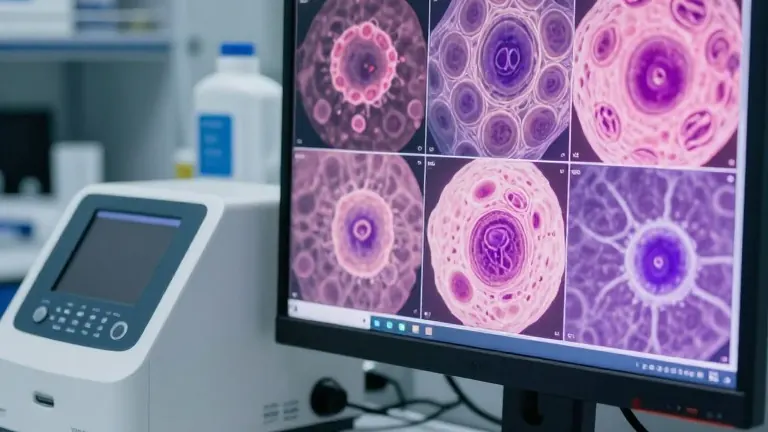
Prof. Ron Kimmel of the Technion-Israel Institute of Technology received $180,000 over three years. His team is building an AI model that analyzes routine pathology samples. The system examines entire tumor slides rather than selected areas. This approach aims to predict whether a breast cancer patient will benefit from chemotherapy. Kimmel noted that current methods rely on basic staining and limited testing. His model uses a digital scanner and internet access, making it usable in clinics with limited medical resources.
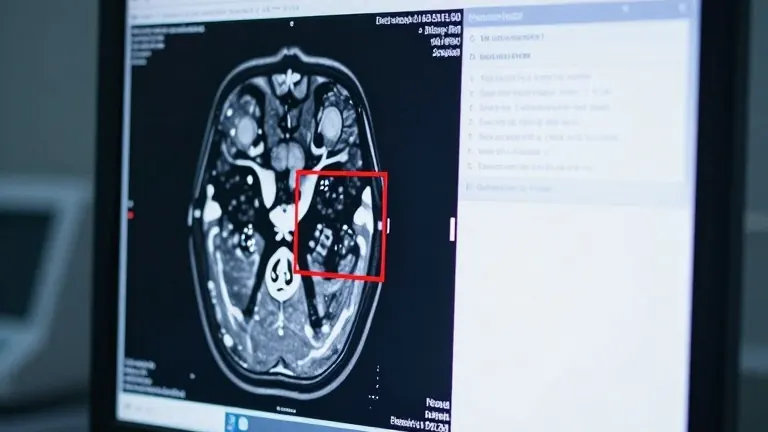
Dr. Debbie Anaby of Sheba Medical Center in Tel Aviv received a $135,000 Career Development Award. Her lab, BreaCIL, uses AI to analyze breast MRI scans. Anaby stated that 60% to 70% of MRIs for high-risk women result in false positives. These false positives often lead to unnecessary biopsies and patient anxiety. Her team converts MRI images into quantitative measurements. They then use machine learning to distinguish malignant tumors from benign lesions. Anaby works with Prof. Miri Sklair-Levy, the head of breast radiology at Sheba. The next phase of the research will test these models on diverse populations, including Black, Hispanic, and Asian women.
Dr. Talia Golan leads the Pancreatic Cancer Program at Sheba Medical Center. She received a five-year grant worth $500,000. The funding will support pre-clinical testing of new biological agents. Golan uses patient-derived models to mimic clinical journeys. Her team uses AI to identify specific patient subtypes that may benefit from precision treatment. About 900 to 1,000 people in Israel are diagnosed with pancreatic cancer annually. Golan’s clinic treats approximately 380 of these patients. She noted that patients with BRCA1 or BRCA2 mutations often respond well to platinum-based chemotherapy and PARP inhibitors.
The genetic factor is a key driver for these research efforts. Research indicates that one in 40 Ashkenazi Jews carries a BRCA1 or BRCA2 mutation. This prevalence is 10 to 20 times higher than in the general population. Individuals with these mutations face a 2 to 6 times higher risk of developing pancreatic cancer compared to those without the mutations. Golan said that AI helps integrate large amounts of clinical and patient data to predict treatment outcomes. She cautioned that AI can produce inaccurate predictions and requires deep knowledge to guide its prompts.
Alan Herman, the executive director of the Israel Cancer Research Fund, said the grants support science that translates into clinical impact. Herman, a cancer survivor, stated that AI opens doors that traditional research methods could not reach. The fund is an international nonprofit based in New York. It invests in Israeli scientists conducting global cancer research. The three researchers share a common goal of using computational tools to find cancers earlier and treat them more effectively.
Golan said the field is seeing rapid advancement in AI-guided research. She described AI as a powerful but complex tool that requires careful management. Anaby said the initial funding allowed her team to develop models using data from Israeli patients. The teams plan to expand their work to wider populations. Kimmel’s system is designed to improve prognostic tools for oncologists worldwide. The research aims to reduce overtreatment and undertreatment by matching patients to the most effective therapy.
The grants will fund multi-year projects involving data analysis and clinical testing. Kimmel’s lab focuses on geometric image processing. Anaby’s work combines image processing with quantitative analysis. Golan’s program focuses on pancreatic cancer treatment resistance. All three projects rely on the ability of AI to analyze large datasets. The researchers aim to provide objective measurements that supplement human observation. The funding supports the transition from initial model development to broader population testing.
Source: St. Louis Jewish Light