Apple’s iconic pocket music player turns 25
Twenty-five years ago, Steve Jobs introduced a device that changed how people carry their music, proving that a small gadget could hold an entire library.
By Valentina Cruz ·
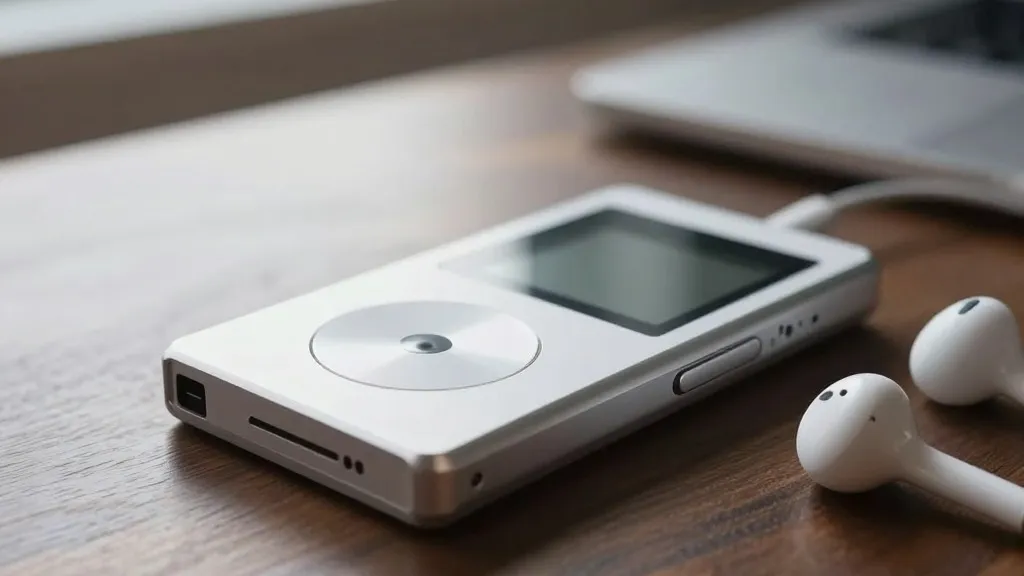
Steve Jobs stepped on stage in October 2001 to introduce a device that would soon become a cultural icon. He teased the audience with a description of a breakthrough digital device that was not a Mac, ultimately revealing the original iPod. For many tech enthusiasts, this pocket-sized player became the essential carry-along item before smartphones matured enough to make dedicated music players obsolete. The core promise of the launch was simple: your entire music library, fit into your pocket for $399.
At the time of the launch, Apple had successfully navigated its way out of corporate beige into the modern Mac OS X era. With iBooks and iMacs already established, the company’s revival was well underway during a challenging period for the tech industry following the dot-com bubble burst. Jobs envisioned the Mac as the central hub for a user’s digital life, connecting cameras, camcorders, and portable players. He reasoned that music was a massive target market lacking a clear leader, making it the ideal entry point for Apple’s portable hardware strategy.
While companies like Sony, Creative, and Sonic Blue already offered portable digital music players, Jobs argued that none had yet found the right formula for the experience. He identified hard disk-based players as the optimal technology for market entry, distinguishing them from CD players, MP3 CD players, and flash-based devices. The original iPod was introduced as an MP3 player capable of handling popular formats like WAV and AIFF with CD-quality sound. Its 5GB storage capacity allowed it to hold approximately 1,000 songs, which Jobs noted represented the entire music library for most people.
The device’s physical form factor was a major selling point, made possible by Toshiba’s ultra-compact 1.8-inch hard drive. The player measured just 2.4 by 4 by 0.78 inches and weighed 6.5 ounces, making it lighter than most cell phones of the era. Despite its small size, it included advanced features such as 20-minute skip protection and fast file transfers. Apple highlighted its FireWire 400 connection, claiming it could transfer an entire CD in five to 10 seconds, a significant improvement over USB connections that took about five minutes for the same task.
Power and usability were central to the design. The device featured a rechargeable lithium-polymer battery that provided 10 hours of continuous playback and could reach 80% charge in an hour. The interface was designed for single-hand use, featuring a scroll wheel with tactile feedback that allowed users to quickly navigate playlists, artists, and songs. During the unveiling, Jobs demonstrated the player with a track by Sarah MacLachlan, showcasing the ease of use he claimed was central to the Apple experience.
The launch also included the release of iTunes 2, which introduced Auto-Sync capabilities. This feature ensured that music libraries curated on a Mac remained synchronized with the pocket player whenever it was connected for charging or transfers. The iPod also functioned as a FireWire hard disk drive. Although the first iPhone arrived in early 2007, the iPod line continued alongside it for over a decade before the final model, the 7th-generation iPod Touch, launched in May 2019. The product line was officially discontinued in May 2022, marking the end of a quarter-century of influence.
Source: Tom's Hardware