France mobilizes 70,000 officers for school protest
The state spent heavily on security for a nationwide march, while unions dispute official turnout figures and demand better facilities for students.
By Yuna Patel ·
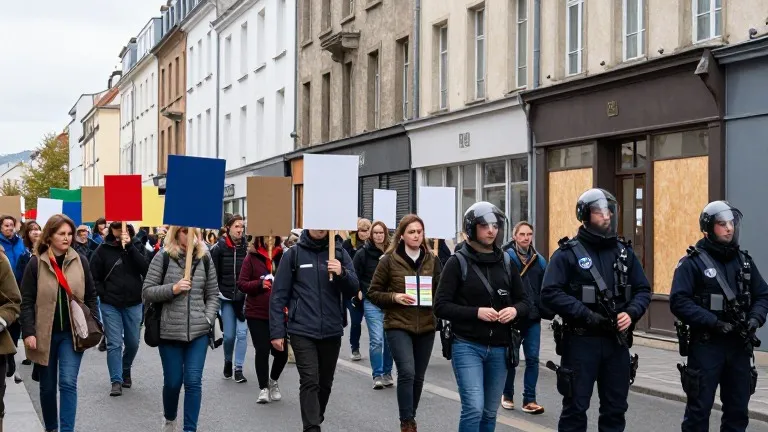
French taxpayers funded a massive security operation for Saturday, with more than 70,000 police officers deployed to guard streets in major cities. The government estimated that at least 400,000 people participated in the nationwide marches. Trade unions claimed the actual number was double that figure. Shops boarded up their windows and many museums closed their doors to avoid damage from the crowds.
The protests centered on deteriorating school conditions. Students demanded more teachers and repairs to crumbling buildings. They also complained about a lack of chairs in overcrowded classrooms. The movement began in mid-September among high school students aged 15 to 18. It has since expanded to include parents, teachers, and trade unions. This growth reflects a demand for public investment in infrastructure and education staffing.
In Paris, at least 110,000 people marched along the eastern edge of the city. The atmosphere remained relaxed for much of the afternoon, with brass bands playing and families participating. However, tensions rose at the route's end at Porte de Vincennes. Groups of masked men threw glass bottles and stones at officers. Police responded with teargas, water cannon, and stun grenades. Similar clashes occurred in Lyon, Lille, Montpellier, Nantes, Toulouse, and Marseille.
Interior Minister Laurent Nunez reported 135 arrests across France. Authorities confiscated various items from protesters, including metal balls, lead pellets, fireworks, slingshots, and a katana sword. The government had feared a repeat of the previous Saturday, which saw at least 2,700 arrests and significant property damage. Officials kept marches away from city centers, a policy critics say limits the political impact of the demonstrations.
Nadège, a 43-year-old communications worker, described the atmosphere as one of cautious courage. She said, "People are afraid now." Jérôme Rodrigues, a figure from the 2018 gilets jaunes movement, noted that the government is pushing demonstrators to the edges of cities. He said, "It's not police shields that will provide an answer to French people struggling and unable to make ends meet." Rodrigues indicated that demonstrations are likely to continue each weekend.
In Orléans, protesters marched against a congress by Marine Le Pen's National Rally party. The crowd shouted slogans criticizing both President Emmanuel Macron and Le Pen. Macron is set to step down next year. The current unrest presents a financial and political challenge for the outgoing administration as it manages its final months in office.
Police investigations are currently underway into injuries sustained by children and protesters during previous clashes. The government continues to ban non-union demonstrations it deems illegitimate. The next round of protests is expected to take place on the coming weekend.
Source: The Guardian
More Business · World news · Business Watchdog · Report a business · Got a Story?