Ecuador logs 121 arrests in first night of five-province curfew
The Interior Ministry deployed police and military units to enforce the 10-day restriction in coastal areas where over 90% of homicides are linked to organized crime.
By Layla Edwards ·
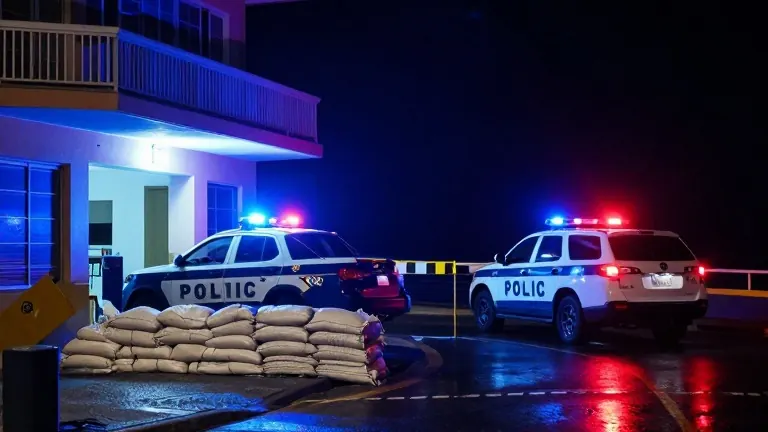
Ecuadorian authorities recorded 121 arrests during the first night of a new curfew that took effect at midnight on Sunday. The Interior Ministry deployed operations to enforce the decree across five coastal provinces with the highest rates of criminal activity in recent months.
Police reported 68 detainees in Guayas and 53 in Esmeraldas by the end of the first day. The restriction limits movement between midnight and 5 a.m. and will remain in place for 10 days. The measures apply to the provinces of Guayas, El Oro, Los Ríos, Esmeraldas, and Manabí.
Minister of the Interior John Reimberg told the public on Friday that the government would implement important measures for security. On Sunday, his ministry used its X account to confirm the deployment of operations to guarantee compliance with the new rules.
The executive decree cites a police report stating that more than 90% of homicides in these specific territories are related to criminal violence. The document also notes the continuity of extortionate kidnappings, extortion, murders, and the availability and theft of weapons.
Ecuador closed 2025 as its most violent year on record, with 9,216 murders, a rate of 50 per 100,000 inhabitants. This figure reflects five years of expanding insecurity driven by criminal gangs linked to transnational drug trafficking.
Official statistics show that homicides between January and September of the current year decreased by 8%, which corresponds to approximately 500 fewer cases than in the same period of the previous year. Despite this decline, experts question the structural impact of the curfew.
Diego Pérez, a security expert and professor at the National Institute of Higher Studies, told The Associated Press that the curfew aims to make the government's actions visible rather than addressing the structural center of violence. He described the measures as media-oriented, noting that criminal organizations are flexible and can mobilize to other provinces if pressure is applied in one area. Pérez warned that the intensive use of the Armed Forces poses a risk of weakening institutional strength.
Source: Pioneer Press