Fabyan estate in Geneva drove early American codebreaking
The 1905 home of George and Nelle Fabyan became a center for scientific research and military cryptography that predated federal efforts.
By Layla Edwards ·
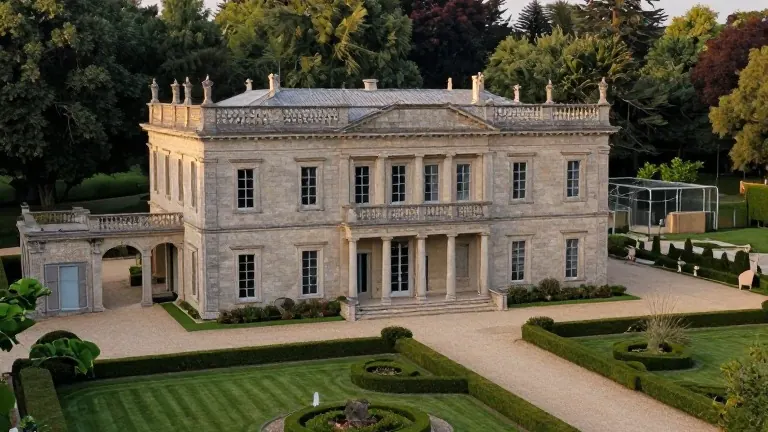
Residents of Geneva, Illinois, who use Fabyan Parkway or visit the local forest preserve are using infrastructure built on the legacy of George and Nelle Fabyan. The couple purchased 300 acres along the Fox River in 1905. That land now hosts the Fabyan Villa Museum and Japanese Garden, operated by Preservation Partners of the Fox Valley.
The estate was more than a private residence. It functioned as a hub for scientific inquiry and military intelligence. Richard Munson, author of the book “George Fabyan: The Tycoon Who Broke Ciphers, Ended Wars, Manipulated Sound, Built a Levitation Machine and Organized the Modern Research Center,” describes the site as the likely first independent research center in the country.
Munson notes that the estate inspired a community of thinkers who advanced fields including acoustics, cryptography, genetics, and physiology. The property featured a Roman-style swimming pool, a Dutch-style windmill, a private zoo, a working lighthouse, and laboratories. Preservation Partners of the Fox Valley confirms that the villa, renovated by Frank Lloyd Wright, became a lavish showplace with fountains and gardens.
The site’s role in ending World War I is documented in a 1993 history of signal intelligence published by the U.S. Army’s Center for Military History. The report states that no federal agency performed cryptanalytics before 1917. George Fabyan began this work in June 1916 at his own expense.
Fabyan organized a small group of trained cryptanalysts at his Riverbank Laboratories in Geneva. These analysts worked on codes and ciphers forwarded by the War, Navy, State, and Justice Departments. This private effort ceased in 1919 after the war ended. It served as an antecedent to the official signal-breaking work that later contributed to the Allied victory in World War II and the creation of the National Security Agency.
George Fabyan, often referred to as Colonel Fabyan, had diverse interests beyond military codes. He explored the authorship of Shakespeare’s plays and conducted research in acoustics. The Riverbank Acoustical Laboratories, located adjacent to Fabyan Forest Preserve, continue to operate today.
Nelle Fabyan, who married George in 1891, focused on animals and horticulture. She maintained kennels for prize-winning dogs and greenhouses for flowers sold to Chicago hotels and restaurants. Terry Emma, executive director of the Geneva History Museum, shared findings from a 1920 magazine interview at a recent event. The interview reveals that Nelle was also a sculptor and philanthropist.
The Fabyan legacy remains embedded in the local geography and institutions. George Fabyan died in Geneva in 1936. Nelle died in the same city three years later. Their combined efforts transformed a private estate into a site of national historical importance.
Source: Shaw Local Lake County