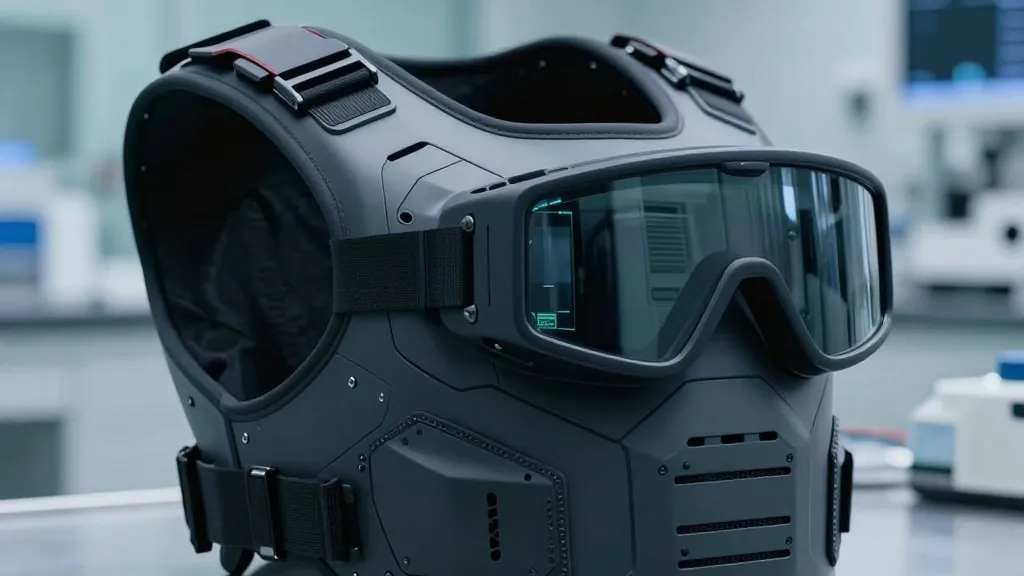
DeepSeek's latest model uses less memory but still guesses facts
The V4.1 Flash 1017 update reduces hardware requirements by 75 percent, yet independent tests show it invents answers on two-thirds of questions it should have skipped.
By Layla Edwards ·
DeepSeek released a new version of its open-weight artificial intelligence model on Wednesday. The update, labeled V4.1 Flash 1017, significantly lowers the hardware requirements for running the software. The company describes the new release as a tool for wish-driven programming, a term that aligns with recent trends in casual coding styles. While the model handles broad instructions, independent testing reveals it still struggles with factual accuracy.
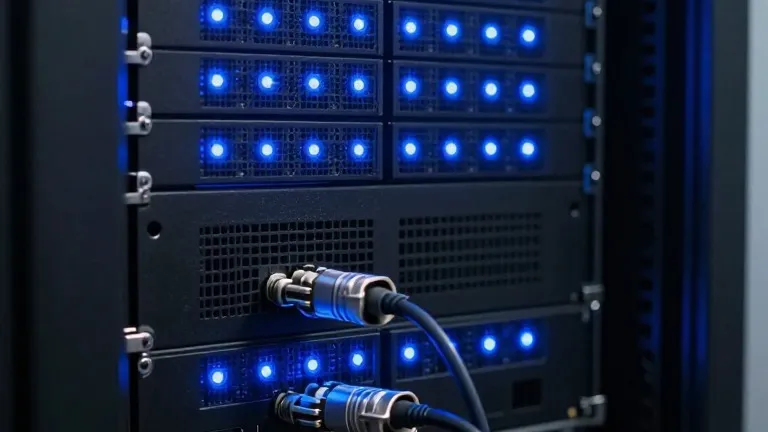
The new model is a Mixture-of-Experts system with 552 billion total parameters. Only 16 billion of those parameters activate during a single run. The system accepts both text and images and supports a context window of 1 million tokens. DeepSeek states that the update requires only one-quarter of the high-bandwidth memory and one-eighth of the solid-state storage for its key-value cache compared to the previous V4 Flash version. The new requirement is 890 bytes per token entry.
Cost data from DeepSeek shows the model is competitive in the current market. At off-peak hours, input tokens cost $0.15 per million, and output tokens cost $0.60 per million. If the system uses cached data, the input cost drops to $0.003 per million tokens. The company also charges $0.75 per 1,000 search queries, a rate lower than its closest rival, Parallel, which charges $1.00. Because the weights are open, third-party providers can host the model and often offer lower prices than DeepSeek's own API.
Artificial Analysis ranks the 1017 model second among large open-weight models on its intelligence index. It achieved a score of 45, compared to 58 for the top-scoring Claude Opus 5.5. The model is also among the fastest in its category. Only Xiaomi's MiMo V2.6-Pro offers a lower cost per task. DeepSeek's own benchmarks place the model between GPT-5.6 Sol and Claude Opus 5, with results showing it beats Anthropic's model in specific task tests.
Reliability remains the main drawback. On the Omniscience benchmark, the model answered 43 percent of questions correctly. It hallucinated on 67 percent of questions where the correct response was to decline an answer. The benchmark scores the model at 5, while Kimi K3-max scores 20 and frontier models score at least 42. This gap suggests the model is better suited for tasks with verifiable outputs, such as coding or format conversion, where errors can be detected and corrected.
Open-weight models like this one play a key role in keeping AI agent costs down. They also serve as a check on price increases from proprietary labs. The tradeoff between lower cost and higher error rates continues to define the landscape for developers choosing between frontier and open models.
Source: Tom's Hardware