US Pressure Aims to Clear Path to Trapped Town
American diplomatic efforts have secured a temporary halt in fighting near Oleshky, aiming to allow supplies in and civilians out of a besieged area in southern Ukraine.
By Layla Edwards ·
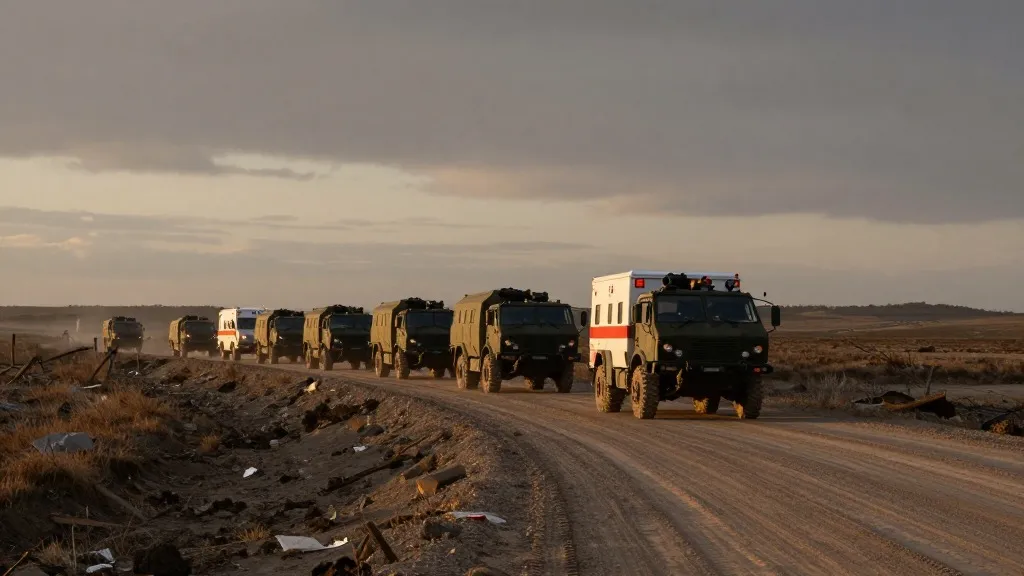
The primary question facing leaders in Washington and Kyiv right now is whether a diplomatic breakthrough can overcome military realities on the ground. For residents of Oleshky, a community in the Kherson region currently under Russian control, the stakes are high. They are cut off from essential supplies and safe escape routes. Ukrainian President Volodymyr Zelenskyy expressed optimism that American involvement will finally crack the stalemate and open a corridor for aid.
Zelenskyy addressed the nation via a video message earlier this week. He indicated that a specific deal regarding the town is close to being implemented. The president emphasized that the current state of affairs is not just difficult, but critical. He noted that Russian military units have placed mines along the roads in the occupied section of the region. These obstacles make travel hazardous for both vehicles and pedestrians, complicating any rescue mission.
The Ukrainian government is pushing for a focused humanitarian operation. The goal is threefold: restore a physical link to the town, deliver necessary food and medical supplies, and allow civilians to exit the combat zone. This is not merely a symbolic gesture. It is a practical effort to save lives and ease the burden on those who remain trapped behind enemy lines.
Negotiations on this issue have been ongoing for a period of time. They have taken place at various levels of government and military command. Zelenskyy stated that Ukraine is prepared to fulfill its side of any agreement. He placed significant weight on the role of the United States in facilitating this process. The president believes that American mediation is the key to making this arrangement work.
Official announcements confirmed the progress made over the weekend. On the evening of Friday, the general staffs of the armed forces of both Ukraine and Russia issued a joint statement. They agreed to a ceasefire in a specific designated area. This pause in hostilities is scheduled to begin on the night of October 27. The main purpose of this truce is to create a safe window for the humanitarian mission in Oleshky to proceed without interruption from heavy fire.
The White House played a visible role in brokering this temporary peace. A statement from the administration highlighted the efforts of US First Lady Melania Trump. She is credited with helping to secure the truce between the two warring parties. The White House described the conditions in Oleshky as a humanitarian disaster that is actively unfolding. This framing underscores the urgency of the situation and the diplomatic priority placed on resolving it.
The Kremlin responded to the development with confirmation of their participation. Dmitry Peskov, the spokesperson for the Russian presidency, verified that Russia has agreed to the ceasefire. His statement indicated that the pause in fighting is specifically intended to allow the humanitarian mission to move forward safely. This acknowledgment from Moscow signals a willingness to cooperate on this particular front, at least for the duration of the operation.
Dmytro Lubinets, who serves as Ukraine’s Parliamentary Commissioner for Human Rights, provided a specific timeline for the event. He stated that the humanitarian operation in Oleshky is set to take place on October 29. This date falls within the window of the agreed-upon ceasefire. The coordination between military and human rights officials suggests a structured approach to the mission. All parties are aiming to execute the plan efficiently to maximize aid delivery and evacuations.
For the citizens of Oleshky, the coming days will be decisive. The success of this operation depends on the strict adherence to the ceasefire terms by both sides. Any violation could jeopardize the flow of supplies and the safety of those trying to leave. The involvement of the United States adds a layer of international oversight to the process. This diplomatic push reflects a broader effort to find practical solutions to localized crises within the larger conflict. The focus remains on ensuring that the window of peace is used effectively to address the dire needs of the population.
The outcome of this mission will likely influence future negotiations on other fronts. If the ceasefire holds and the aid reaches the intended recipients, it may set a precedent for similar operations elsewhere. Conversely, any setbacks could complicate diplomatic efforts. For now, the attention of both governments and the international community is fixed on this specific corner of Kherson Oblast. The goal is to turn a diplomatic arrangement into tangible relief for those who are waiting.
Source: Ukrainska Pravda