UK Government Launches Emergency Supply Campaign Amid Rising Public Preparedness
Official guidance to stock three days of essentials has accelerated a trend of household preparedness driven by climate and geopolitical concerns.
By Layla Edwards ·
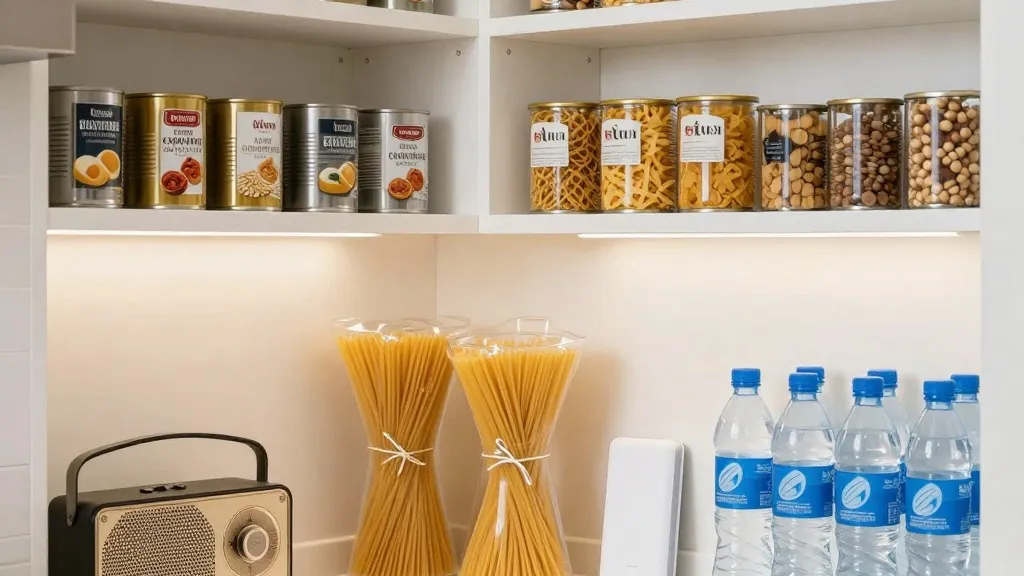
The United Kingdom government launched a new national campaign on Thursday, urging residents to maintain a three-day supply of essential goods to prepare for a broad range of potential emergencies. The initiative, known as Be Ready, aligns with a growing movement of citizens who have independently begun stockpiling food, water, and power sources in response to official warnings. These warnings have cited risks from Russian state-sponsored terrorism and the escalating impacts of the climate crisis.
While the formal campaign began this week, many households have been preparing for months. Officials have sent similar signals for several months, prompting early adopters to build their reserves before the public announcement. The government’s aim is to ensure families are resilient against disruptions that could affect daily life, from power outages to supply chain breaks.
Lawrence Barratt of Hythe, Hampshire, represents the typical early adopter. He began his preparations about two weeks ago after seeing the government’s advice online. His strategy involves adding tinned and dried items to his weekly grocery runs. He is specifically accumulating beans, soups, chilli con carne, noodles, and rice. These foods are chosen because they can be cooked using the bottled water he is also purchasing gradually. His goal is to secure enough provisions for two people for three days.
Barratt is also gathering non-food essentials, including a first aid kit, a battery-powered FM radio, and a torch. He relies on a portable power bank originally used for camping, which he believes can charge phones, run a television, and power a small fan heater. He noted that the government’s Be Ready website made him realize he would be completely unprepared for anything. His decision was also influenced by memories of the first lockdown in 2020, when shelves were emptied of staples.
In Greenwich, London, Marco Camurri is taking a similar but more extensive approach. His family is collecting pasta, passata, stock cubes, tinned food, bottled water, medicines, and toilet paper. Camurri stated that they remember the pandemic and are prepared for the possibility of temporary evacuation if the UK enters war or faces extreme infrastructure failure. His household stores wood in the garden for boiling water and keeps power banks charged along with USB flashlights. They maintain their car fuel tank above 50 percent, providing about 300 miles of driving range.
Camurri’s family began preparing a few months ago when reports linked El Niño to potential supply chain disruptions. Because they consume what they stock, he described the effort as equivalent to one extra week of shopping for staples. To manage this, the family is creating a spreadsheet to track expiry dates for their stash, ensuring items are eaten and replaced before they spoil.
Jack Davenport of North Shields cited El Niño as a reason for his preparations but noted the difficulty in judging the scale of the country’s many threats. He pointed to climate disasters, Russian shadow threats, artificial intelligence, and interest rate rises driven by energy insecurity. Davenport described the country’s physical and technological infrastructure as creaking and outdated. He suggested the government aims to reduce long-term panic by presenting these events as possible, noting that several generations have not faced the hardship that was common before the war.
Not all residents are convinced by the new guidance. Deirdre O’Sullivan of Leicester called the advice daft, comparing it to 1970s instructions to hide under a table during a nuclear attack. She argued the guidance is inadequate for a genuine emergency, stating that any danger to drinking water should be anticipated more precisely. She believed an extreme food shortage would become apparent over a much longer period.
O’Sullivan likened the campaign to a policy devised by a fictional minister to demonstrate that a government has a plan in place, even if that policy is clearly totally useless. Despite the skepticism, the official campaign continues to push for a standardized level of household resilience across the nation.
Source: The Guardian