Trinity College Dublin Curates 300-Year Gulliver Retrospective
Exhibitions and performances across Ireland examine the satire’s origins and modern echoes, from feminist rewrites to AI anxieties.
By John Wilson ·
Jonathan Swift, the dean of St Patrick’s Cathedral in Dublin, delivered his manuscript to a London publisher by night courier in March 1726 to ensure anonymous release. The work, originally titled Travels into Several Remote Nations of the World, appeared in October of that year and has since been known globally as Gulliver’s Travels.
Three centuries later, Trinity College Dublin and venues across Ireland are hosting a series of cultural events to mark the anniversary. These include exhibitions, seminars, art competitions, and workshops. The programs explore the novel’s origins, its feminist reinterpretations, and its commentary on technology.
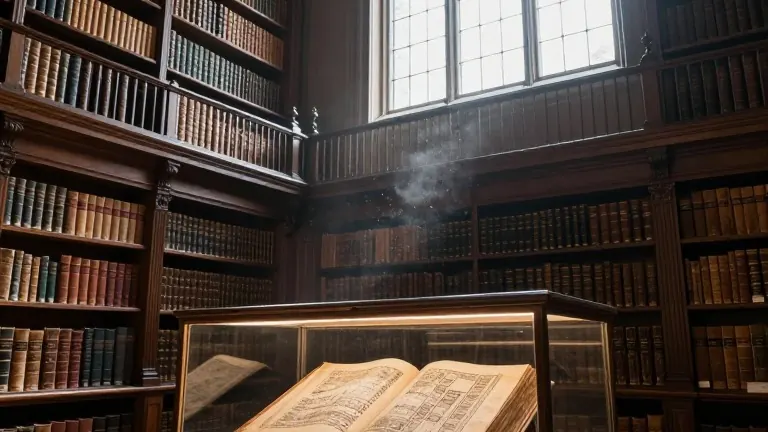
Stephanie Breen, an assistant librarian and co-curator of the Trinity exhibition, stated that the display guides viewers through all the lands Gulliver encountered, not just Lilliput. The collection features hundreds of editions and popularizations from the university’s holdings. Items include engraved illustrations, pop-up versions, a 1976 Marvel comic, and the only known surviving copy of an abridgement printed in 1761. The exhibition remains available online until December.
Aileen Douglas, a professor of English and exhibition co-curator, noted that contemporary works give voice to Gulliver’s wife, Mary, who is largely neglected in the original text. Modern interpretations such as Alison Fell’s The Mistress of Lilliput and Lauren Chater’s Gulliver’s Wife reimagine her perspective. Douglas also pointed to the resonance of Gulliver’s experiences in Laputa, a floating island dedicated to arts and science, with current anxieties about artificial intelligence.
In Laputa, inhabitants attempt to extract sunbeams from cucumbers and use a mechanical engine to produce philosophical tracts without study. In the kingdom of Luggnagg, the Struldbruggs are an immortal race that continues to age and sicken indefinitely. These themes form the core of this year’s cultural discussions. In Lilliput, Gulliver finds a war fought over which end of a boiled egg should be cracked, a satire on European sectarian conflicts. In Brobdingnag, the ruler calls humanity a pernicious race of little odious vermin after hearing Gulliver’s accounts of corruption.
Swift, born in 1667, combined his roles in the Church of Ireland with writing pamphlets and essays. He wrote Gulliver’s Travels in Dublin and at an estate in County Meath, where local farm workers of varying heights reportedly inspired parts of the storytelling. His earlier work, A Modest Proposal, suggested alleviating the plight of the Irish poor by selling their children to the wealthy. Although publisher Benjamin Motte did not know Swift’s identity, readers guessed the author based on his literary record, as Douglas observed that people sort of knew it was him.
A panel discussion on art challenging power and human vanity is scheduled for Wednesday at Trinity. St Patrick’s Cathedral will host a children’s choir performing the premiere of a work by composer Seán Doherty, alongside organ recitals and readings by Swift scholar Brendan Twomey. The Robinson library in County Armagh is hosting an exhibition and lecture series that will run through December.
Source: The Guardian
More Culture · World news · Report a business · Got a Story?