Federal Draft Sets Cyan for Robotaxis
NHTSA proposes optional blue-green lights to standardize autonomous vehicle identification and remove legacy control requirements.
By John Wilson ·
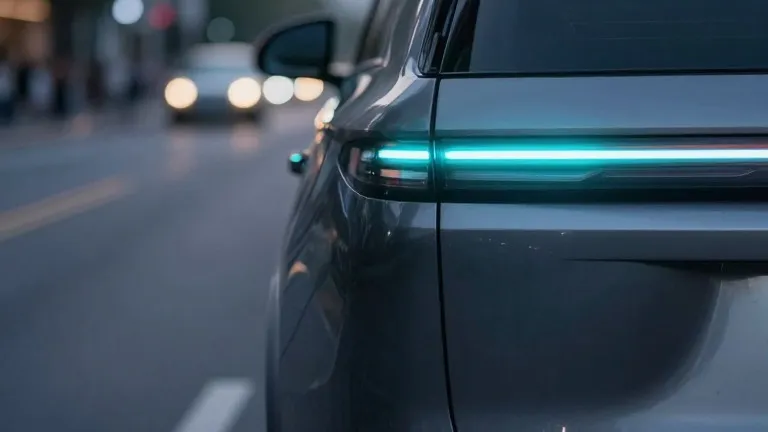
The National Highway Traffic Safety Administration has proposed a national standard for identifying driverless vehicles, selecting a specific blue-green hue to distinguish autonomous cars from those with human operators. The agency released amendments to Federal Motor Vehicle Safety Standard No. 108 on Wednesday, aiming to resolve a long-standing debate in the industry regarding how self-driving cars should communicate their status to surrounding traffic.
The proposal designates cyan as the required color for marker lamps when an automated driving system is active. NHTSA officials stated that the choice avoids visual confusion because existing traffic regulations already assign red, amber, white, and flashing blue or red lights to specific functions like braking and emergency signaling. By reserving a new color for autonomous operations, the agency seeks to provide a consistent visual cue for law enforcement and other road users.
The rules would apply to companies including Waymo, Nuro, and Zoox, as well as traditional automakers such as GM and Mercedes-Benz. While the cyan lights would remain optional for manufacturers, the proposal sets strict federal requirements for their brightness and placement. This approach intends to prevent a fragmented market where different companies use varying colors or signal patterns, ensuring a uniform configuration across the sector if companies choose to install the lights.
The amendments also address internal vehicle controls that are unnecessary for vehicles without human drivers. NHTSA proposes removing requirements for physical hazard switches, manual beam shifters, and turn levers. The agency plans to update the 12.8-volt testing standard to accommodate modern LED systems, reducing administrative hurdles for manufacturers. It is also considering removing rules that dictate the vertical placement of high-beam lights relative to low-beam lights.
These changes support a wider Department of Transportation initiative to accelerate the deployment of autonomous vehicles. The goal is to simplify the regulatory environment for cars designed without traditional human controls, such as steering wheels and pedals. The proposal moves beyond state-level approvals, such as those granted to Mercedes-Benz for its Level 3 Drive Pilot vehicles, to create a single federal framework.
Existing rules remain in effect until the new standard is finalized. NHTSA is currently auditing the Tesla Cybercab to review the technical data used for its certification. The agency is examining the vehicle's lack of sideview mirrors, pedals, and a steering wheel, features that are currently mandated under federal standards for vehicles with human drivers.
Source: The Verge
More Business · Tech news · Business Watchdog · Report a business · Got a Story?