277 million in ad spend faces a 33% approval floor for GOP
With less than two weeks until voters head to the polls, Republican leaders are trying to distance themselves from a president whose approval rating sits at its lowest point of the cycle.
By Yuna Patel ·
Midterm elections typically function as a referendum on the governing party, and history shows that the party in power usually loses seats. President Donald Trump has made that historical pattern more difficult for his colleagues to navigate by making major policy decisions without consulting Congress. These actions include imposing tariffs, starting a war in the Middle East, and overseeing large construction projects in Washington.
The financial commitment to the Republican cause has been substantial. Trump-aligned political groups have spent nearly $277 million to boost Republican candidates since September. That amount is on pace to make this the most expensive legislative election in history. Despite that spending, the war with Iran and trade disputes with Canada have put Republicans on the defensive in key states.
Rep. Derrick Van Orden of Wisconsin, one of the most vulnerable Republicans in the House, said during a debate that the war with Iran is making it "exponentially more difficult" for his party to keep control of both chambers. He acknowledged his support for the effort while noting the strain it places on his campaign. The conflict, which Trump said would last only weeks, is now in its eighth month without a clear end strategy.
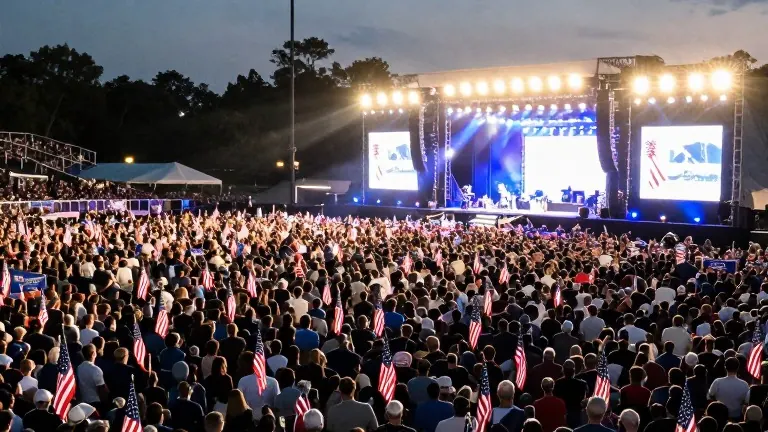
Economic costs have become a central theme for voters. Trump has dismissed affordability concerns as a "fraud" and told a rally in Georgia he did not care "one damn thing" about criticism over gasoline prices. Former President Barack Obama told a crowd in Ohio that the administration's actions are directly responsible for rising costs. Trump, meanwhile, gained $1.2 billion from cryptocurrency businesses during a period when most investors lost money.
Trump's approval rating stands at approximately one-third, according to a survey by The Associated Press-NORC Center for Public Affairs Research. That figure is lower than President Joe Biden's rating before the 2022 midterms and lower than Trump's own rating before the 2018 elections, which stood near 40%. Past presidents like George W. Bush and Barack Obama allowed their parties more room to distance themselves when their approval dipped. Trump has generally not offered that space.
Senate races in Texas, Iowa, and Michigan have become focal points for the battle. In Texas, outgoing Sen. John Cornyn warned that his successor, State Attorney General Ken Paxton, is weak against Democrat James Talarico. Cornyn said in an interview that even in Republican-leaning areas, the party has "defective candidates" who will face a tough fight. In Iowa, Sen. Ashley Hinson visited an ethanol plant in Dyersville to highlight her support for the industry, but she faced questions about Trump's deal with Russia to lower diesel prices.
Democrats are using advertising to link Republican candidates to Trump. In Michigan, a Democratic ad describes former Rep. Mike Rogers as "totally for war, totally for Trump." Sen. Elissa Slotkin of Michigan traveled to Hungary to study how voters rejected Prime Minister Viktor Orbán. She said the U.S. is not yet at a "tipping point" where voters are falling in love with Democrats, but rather reacting against the current administration.
Maryland Gov. Wes Moore warned that anger toward Trump is an emotion that will fade. He told reporters that the Democratic Party must deliver results. The elections are scheduled for Tuesday, November 3. Voters will decide the makeup of the House and Senate, with Democrats hoping to flip control of the lower chamber while Republicans work to retain their majorities.
Source: Pioneer Press