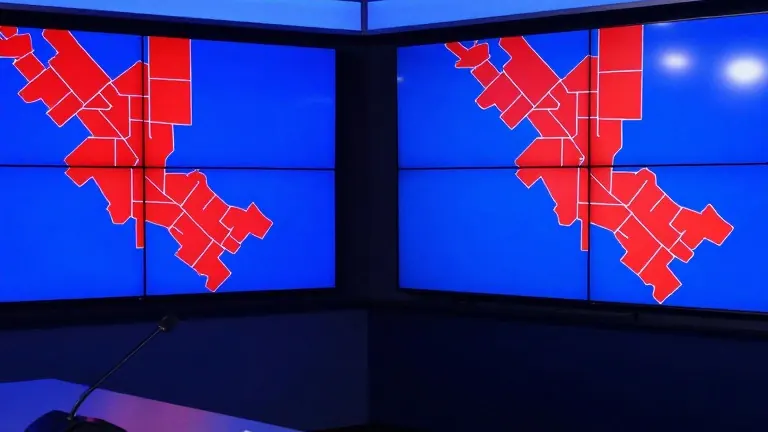
Pritzker faces Bailey in Illinois as national Senate contests heat up
Political scientists predict a quiet 2028 presidential probe for the incumbent governor while warning that seven unexpected states could decide the U.S. Senate.
By John Wilson ·
The midterm election cycle concludes Tuesday.
Voters in Illinois will choose a new state executive and a new U.S. Senator, while national races determine the balance of power in Washington. The state governor's contest is a rematch from four years ago. Democratic incumbent JB Pritzker seeks a third term against Republican challenger Darren Bailey.
Bailey has softened his public tone since his last campaign. Tabitha Bonilla, an associate professor of political science at Northwestern University, noted that the political environment has shifted because Republicans now control the White House and Congress.
Bailey apologized for previously calling Chicago a hellhole. He has discussed finding a place to stay in the city and moved away from an anti-establishment platform. Bonilla said he is now emphasizing affordability, a message she believes mirrors Democratic themes heard across the country.
Pritzker is running for a third term in the governor's office. Speculation persists that he may seek the presidency in 2028. Connie Mixon, a political science professor at Elmhurst University, expects the governor to keep his plans private for the time being.
Mixon said Pritzker will likely enter a quiet phase of presidential preparation. She described a process of staffing up, traveling, and securing funds. She suspects an official announcement of his candidacy would occur sometime in early 2027.
The national contest centers on control of Congress. Republicans currently hold both the U.S. House and the Senate. Democrats aim to flip both chambers. Mixon stated that Democrats hold an exceptional advantage in House races.
She observed that Republican funding has moved away from House races and into Senate contests. She identified seven Senate seats as the primary sources of potential surprise. Those states include Texas, Iowa, and Kansas. Mixon noted that she would not have considered these states competitive a year ago.
Mixon said if Iowa and Kansas turn Democratic, the result could create a blue wave. A Democratic takeover of Congress would complicate the final two years of the Trump presidency. Trump retains the power to veto legislation. Democrats must push for economic improvements to fulfill campaign promises. They face a difficult position if legislation passes because Trump could take credit for any resulting wins.
The election results will determine whether Democrats can deliver on their economic pledges or remain blocked by the executive branch.
Source: ABC7 Chicago