Flávio Bolsonaro Gains Ground as Osasco Trades Factories for Malls
The city’s shift from manufacturing to the service sector is driving a political realignment ahead of Brazil’s Sunday run-off vote.
By Layla Edwards ·
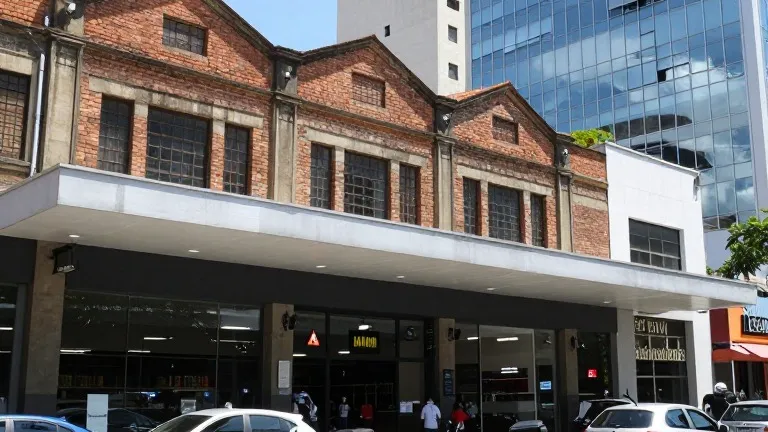
Brazilian voters will head to the polls this Sunday for a presidential run-off, a contest increasingly defined by the nation's rapid move away from industrial jobs. In Osasco, a suburb of São Paulo that once thrived on metal and chemical manufacturing, the economic base has shifted. Shopping malls and delivery app hubs now occupy space previously held by factories. This local transformation helped push the municipality from supporting President Luiz Inácio Lula da Silva in 2022 to backing right-wing candidate Flávio Bolsonaro in this month's first round.
Gilberto Almazan, who leads a local metalworkers' union, describes the change as a stark departure from the traditional working-class model. He notes that metal, chemical, and textile plants have vanished while five malls were constructed. Almazan argues that the union movement that propelled Lula into power is now outdated. Many current workers operate as drivers or food couriers, a shift Almazan labels "Uber-isation." He believes these workers prioritize schedule flexibility over the collective benefits and welfare programs associated with Lula’s platform.
Richard Lapper, a biographer of both Lula and Jair Bolsonaro, points to Brazil's late industrialization and early deindustrialization as key factors in this political swing. He describes Lula as a "victim of his own success," suggesting that economic gains have not translated into a sense of security for many citizens. Despite unemployment hitting a record low and Brazil being removed from the UN's Hunger Map, Lapper cites higher prices, household debt, and high interest rates as drivers of public discontent. Robson, a 53-year-old civil servant and former Lula supporter, blames the current administration's "mismanagement" for the heavy tax burden he feels.
Flávio Bolsonaro has positioned himself as an alternative by proposing cuts to government spending, ministries, and specific taxes. He has stated he would retain certain of Lula’s flagship welfare initiatives. The campaign has also navigated the challenge of high abstention, with 33 million Brazilians skipping the first round, the highest number since 1998. Lula’s team is responding with large-scale street rallies, including one in São Paulo that drew approximately one million people. Lula, 80, has also used social media to address age-related criticisms, referring to himself as the "king of selfies."
Support for Lula remains strong among lower-income voters. In Maré, a large favela in Rio de Janeiro, Lula won despite above-average abstention. Vitoria, an 18-year-old mother, cites the increased minimum wage and free essential medicines as reasons for her support. She remains wary of Bolsonaro's plan to designate the Comando Vermelho gang as a terrorist organization, recalling police raids in Rio last year that resulted in more than 130 deaths. Andreza Dionísio, a local resident, attributes low turnout in her area to last-minute polling station changes and a general sense of hopelessness about the future.
Evangelical churches are playing an expanding role in the political conversation, with roughly a quarter of Brazilians now attending. Pastor Silas Malafaia, who is currently under investigation for allegedly obstructing the coup trial of Jair Bolsonaro, says Flávio Bolsonaro aligns with church values on family and abortion. Malafaia describes the probe against him as politically motivated. As the run-off approaches, Almazan fears that the political landscape that once favored Lula may not return.
The next phase of the campaign will focus on converting undecided voters and mobilizing the 33 million who did not participate in the first round. Both campaigns are scheduled to hold major rallies in key urban centers ahead of the Sunday vote. The final tally will determine which candidate secures the presidency, following a first round in which the winner has historically gone on to take office.
Source: BBC News
More Politics · World news · Report a business · Got a Story?