15 Died Because Boeing Ignored Bearing Fractures on UPS MD-11 Fleet
NTSB hearings revealed that only four of ten known bearing failures were reported to the FAA over two decades.
By Layla Edwards ·
Investigators have determined that stress fractures in engine pylon bearings caused the fatal crash of UPS Flight 2976 on Nov. 4, 2025, which killed 15 people. The National Transportation Safety Board (NTSB) is finalizing its findings, with a full report due within the next year. The agency concluded that the failure was not a random event but the result of a long-standing mechanical issue that remained undetected during routine operations.
The Boeing 747-400 is not the aircraft in question; the crash involved the McDonnell Douglas MD-11, a cargo plane designed as a successor to the DC-10. In 1979, a DC-10 crashed in Chicago after its left engine detached, killing 273 people. That disaster revealed hydraulic vulnerabilities in the design. The MD-11 was intended to address these issues with larger dimensions and advanced technology, yet it retained structural similarities that would later prove critical.
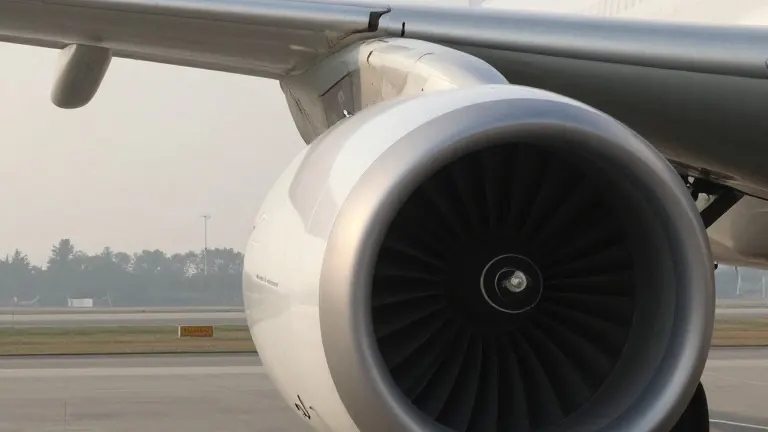
The specific failure in 2025 involved a pylon bearing that attached an engine to the wing. Over time, the bearing migrated away from the plane, cracking the lug nuts. When the lugs failed during takeoff, the engine rotated and detached. Dr. Melanie Violette of the FAA explained that a misunderstanding from 20 years ago led regulators to view this bearing as non-critical. It was not designated a principal structural element because officials believed it was not a safety issue if it broke.
Records show Boeing documented 10 bearing fractures on MD-11s over the last two decades. Only four of those incidents were reported to the FAA. In 2007, two fractures had occurred before a safety review. By 2008, three total fractures had been logged, prompting a service letter that did not require a permanent fix. By 2011, six total fractures had occurred. Boeing extended the inspection interval for these planes, meaning Flight 2976 would not have been checked for this specific issue had the timeline not been altered. David Springer, UPS Senior Director of Engineering, stated that if his company had known the full scope of the damage, they would have asked different questions.
The plane underwent extensive maintenance at San Antonio Aerospace for nearly a month prior to the crash. The only way to detect the bearing separation was during a major maintenance inspection. Seventeen days after returning to service, First Officer Lee Truitt, Captain Richard Wartenberg, and Captain Dana Diamond boarded the aircraft. A pilot who flew the same plane hours before the crash told investigators it flew perfect. The mechanical issue remained hidden from the crew until the moment of failure.
The NTSB held preliminary hearings in May 2026 involving the FAA, the Independent Pilots Association, UPS, and Boeing. These sessions established the timeline of the bearing failures and the regulatory decisions made over the previous 20 years. The final report will detail how the design failed to act as a failsafe, contradicting the original engineering intent.
Source: WDRB
More Business · Business Watchdog · Report a business · Got a Story?